











Penis piercings have existed for thousands of years. However, they still raise real medical questions today. If you are thinking about getting a penis piercing, you deserve clear, honest information — not hype and not scare tactics.
This guide explains what penis piercings involve, the proven risks, and what doctors recommend for safety. It draws on guidance from Cleveland Clinic, Mayo Clinic, and UK National Health Service (NHS) piercing resources. It does not replace advice from a doctor, urologist, or licensed piercing professional.
What Is a Penis Piercing?
A penis piercing is any piercing placed on the penis, foreskin, or scrotum. According to Cleveland Clinic, people usually choose these piercings for aesthetic reasons or because they believe the jewelry will increase sexual pleasure for themselves or a partner.
There are many placement options. Common types include:
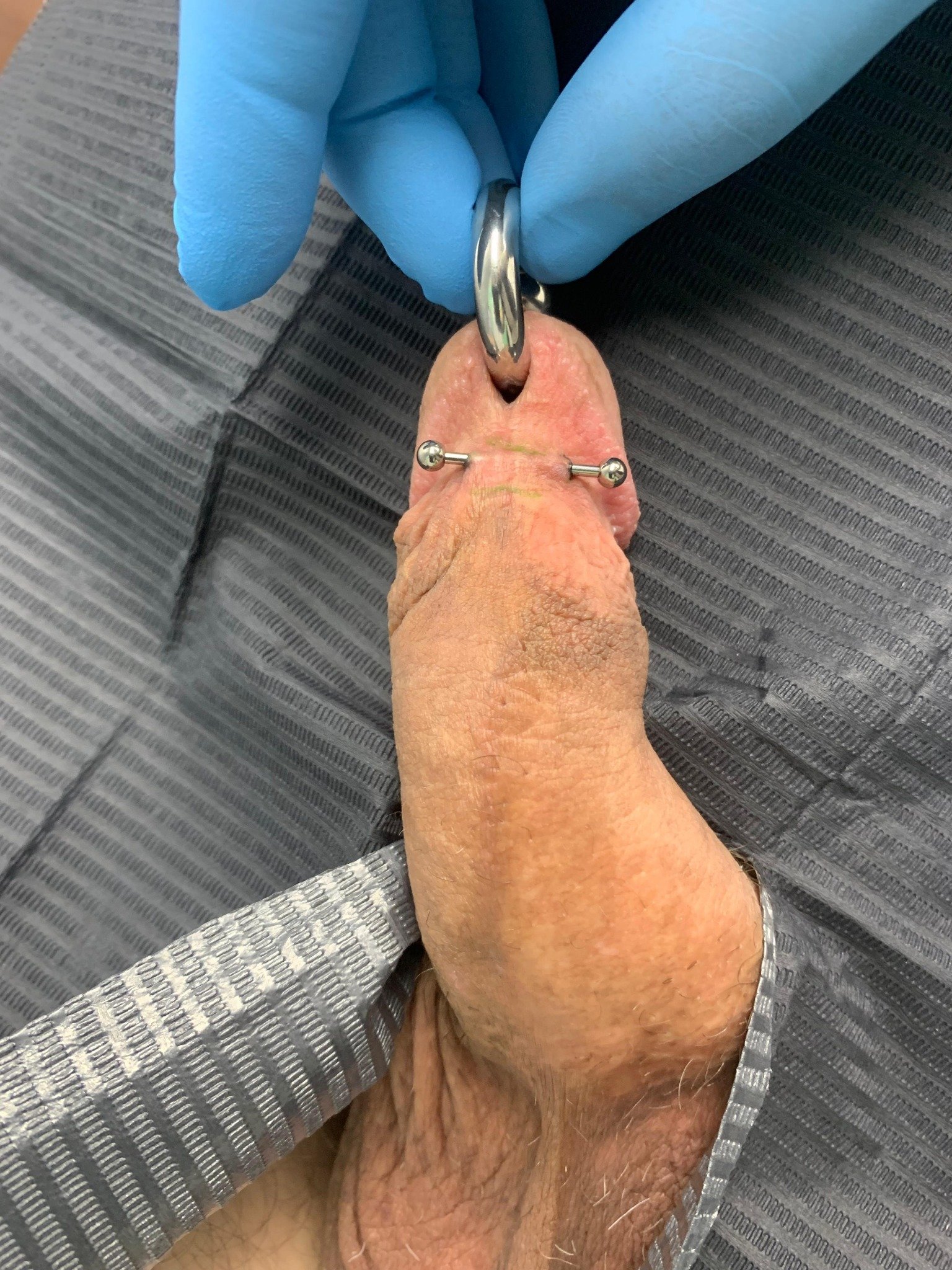
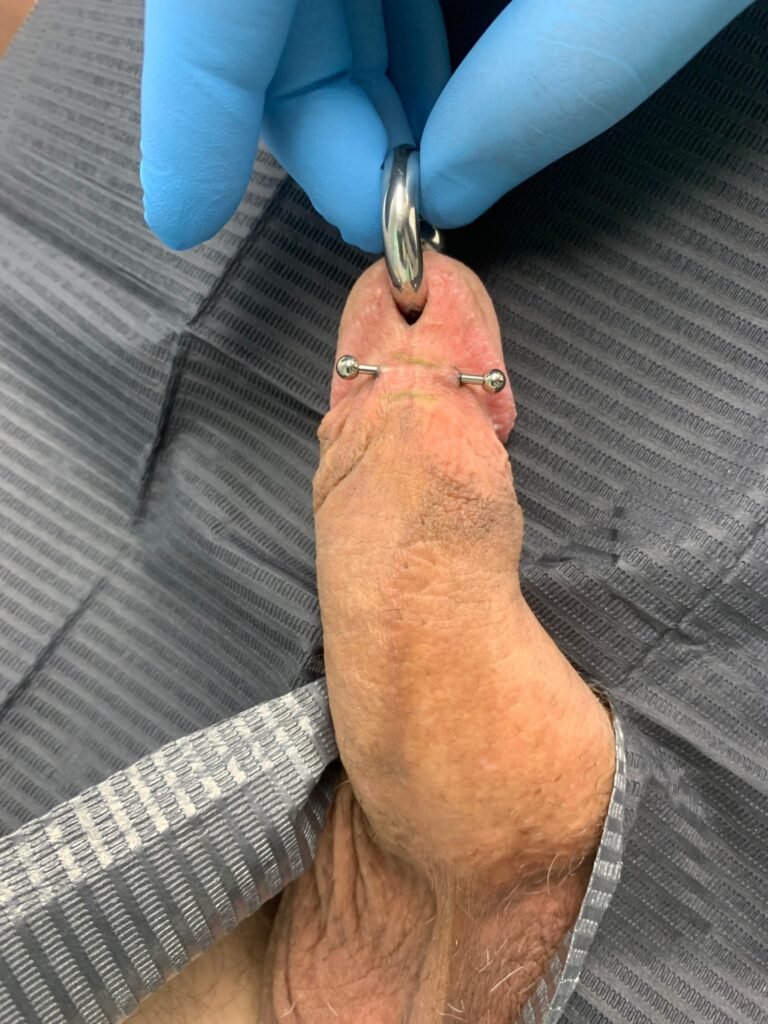
- Prince Albert (PA): Enters through the urethral opening and exits on the underside of the glans (head).
- Reverse Prince Albert: Similar entry point, but exits on the top of the glans.
- Ampallang: Passes horizontally through the glans.
- Apadravya: Passes vertically through the glans.
- Dydoe: Placed through the ridge of the glans, typically on circumcised penises.
- Frenum: Placed on the underside of the shaft.
- Hafada or scrotum piercings: Placed on the scrotal skin rather than the penis itself.
Consequently, “penis piercing” is a broad category. Each placement carries a different level of risk, and some are considerably safer than others.
How Penis Piercings Are Done
A licensed piercer typically uses a sterile hollow needle to create the piercing channel, then inserts jewelry such as a barbell, captive bead ring, or circular barbell. Reputable piercers follow strict hygiene protocols, including single-use needles and sterilized equipment.
Because the genital area has dense nerve endings and rich blood supply, professional placement matters. Cleveland Clinic urologist Dr. Ryan Berglund recommends choosing an experienced, reputable piercing studio rather than attempting a piercing at home or with unsterilized tools.
Healing Time
Healing time varies by piercing type, placement, and individual health. NHS-affiliated piercing aftercare guidance places genital piercing healing time at roughly 2 to 12 weeks, though Cleveland Clinic notes that some piercings may take three months or longer to fully heal. Full internal healing can continue well beyond the point when the piercing looks healed on the surface.
During healing, it’s normal to notice:
- Redness, tenderness, or mild swelling for the first few weeks
- A pale, odorless discharge that crusts around the jewelry (this is plasma, not pus)
- Some itching as the skin repairs itself
Risks and Side Effects
Genital piercings carry risks that differ somewhat from ear or nose piercings. Understanding them helps you make an informed decision.
Infection
Any piercing breaks the skin barrier, so infection is a possibility. Mayo Clinic lists skin infection as a recognized complication of penis piercings. Warning signs include redness, warmth, swelling, pain, discharge, or fever. The groin area’s warm, moist environment can make infection more likely if aftercare is inconsistent.
Nerve Damage
The penis contains dense nerve tissue involved in sensation and sexual function. Dr. Berglund explains that if a piercing damages these nerves, it can lead to erectile dysfunction or, alternatively, a loss of sensation in the area. Piercings placed only through skin — rather than through the shaft or urethra — generally carry a lower risk of significant nerve injury.
Urinary Problems
The Prince Albert piercing passes through the urethra, the tube that carries urine. As a result, it can occasionally create a fistula — an abnormal connection between the urethra and the skin surface. This can cause urine to spray rather than stream and may raise infection risk.
Sexually Transmitted Infection (STI) Risk
Condoms remain the most effective barrier method against STIs during penetrative sex. However, piercings on the glans, foreskin, or shaft can snag or tear condoms, according to Cleveland Clinic. A torn condom no longer protects against STIs or pregnancy. Removing jewelry during sex, or choosing a placement such as the base or scrotum, may lower this particular risk.
Metal Sensitivity
Nickel allergy is common and can cause itching, dryness, redness, or scaling around the piercing. Cleveland Clinic recommends nickel-free materials such as surgical titanium or high-karat gold, since some stainless steel and sterling silver jewelry still contains detectable nickel.
Jewelry Migration or Rejection
Piercing jewelry can gradually shift or be pushed out by the body, particularly in areas under friction or tension. This is a recognized general piercing risk, not one unique to genital piercings.
Are There Benefits?
Reported benefits of penis piercings — such as increased sensation or sexual pleasure — are based on personal experience rather than controlled clinical research. Some people report satisfaction with the appearance or feel of a piercing. Nevertheless, no major health authority has published clinical evidence confirming that penis piercings reliably improve sexual function or pleasure for either partner. Anyone considering a piercing for this reason should weigh personal experience reports against the documented, evidence-based risks above.
ALSO READ: What Is Charlie Health? A Complete Guide to Virtual Mental Health Care
Aftercare Tips
Consistent aftercare reduces complication risk. Guidance adapted from NHS piercing aftercare resources and Cleveland Clinic includes:
- Wash your hands with soap and water before touching the piercing.
- Clean gently, typically with a saline (saltwater) soak, a few times daily as directed by your piercer.
- Keep the area dry between cleanings, and pat — don’t rub — dry with a clean paper towel.
- Avoid tight or restrictive underwear that rubs against fresh jewelry, though supportive underwear can help hold a bandage in place initially.
- Abstain from sexual activity, including masturbation, until the piercing has fully healed, since friction and shared bodily fluids raise infection risk.
- Avoid baths, hot tubs, and pools while healing; opt for showers instead.
- Don’t remove or change jewelry early, since the channel can close or narrow quickly.
When to See a Doctor
Contact a healthcare professional promptly if you notice:
| Symptom | Why It Matters |
|---|---|
| Fever, chills, or spreading redness | May indicate a spreading infection |
| Pus-like discharge or foul odor | Possible sign of bacterial infection |
| Difficulty urinating or spraying urine stream | May indicate urethral or fistula issues |
| Numbness or persistent pain | Possible nerve involvement |
| Jewelry that seems to be sinking into the skin | Sign of possible migration or rejection |
Mayo Clinic advises speaking with a healthcare professional about any sudden changes in ejaculation, unusual sores, or persistent bleeding involving the penis. Genital piercings should also generally be removed before certain medical procedures — ask your doctor if this applies to your situation.
Pros and Cons at a Glance
Potential pros
- Personal expression and body autonomy
- Reported (though not clinically proven) increases in sensation for some individuals
- Wide range of placement and jewelry styles
Documented cons
- Infection risk during healing and afterward
- Possible nerve damage affecting sensation or erectile function
- Urethral complications with certain placements (notably Prince Albert)
- Increased risk of condom breakage during sex
- Longer healing time than most non-genital piercings
- Metal sensitivity reactions
Common Myths vs. Facts
| Myth | Fact |
|---|---|
| “Penis piercings guarantee better sex for both partners.” | This is a personal-experience claim, not something backed by clinical research. |
| “All penis piercings carry the same risk.” | Risk varies significantly by placement; surface piercings generally carry lower nerve and urethral risk than deep or urethral piercings like the Prince Albert. |
| “You can pierce yourself safely at home.” | Health authorities consistently recommend a licensed, professional piercer using sterile equipment to reduce infection and injury risk. |
| “Once it looks healed, it’s fully healed.” | Deep tissue healing often continues well after the surface appears normal; full healing can take three months or more. |
Latest Research
Large-scale, peer-reviewed clinical research specifically on penis piercing outcomes remains limited. Much of the available evidence comes from case reports, dermatology reviews on body piercing complications generally (such as a 2012 review in the American Journal of Clinical Dermatology), and clinical guidance from urologists rather than large controlled trials. Historical and anthropological sources note that genital piercing practices date back thousands of years, but modern safety data is still relatively sparse compared with research on more common piercing sites like the ear. Because of this evidence gap, medical organizations generally emphasize risk-reduction guidance — sterile technique, appropriate aftercare, and professional placement — rather than making claims about sexual benefit.
Regional Rules to Know
Regulations on genital piercing vary by country and even by state or region. In parts of the United States, some states restrict genital piercing to adults aged 18 and older regardless of parental consent, and a few explicitly prohibit certain deep piercing types. In the United Kingdom, local authorities commonly prohibit genital piercing for anyone under 16, and many licensed studios set their own minimum age policies. Because rules differ by location, check local regulations or ask a licensed piercing studio directly.
Conclusion
Penis piercings are a personal choice with a long cultural history, but they are not risk-free. Infection, nerve damage, urinary complications, and increased STI exposure through condom breakage are documented, real possibilities. Choosing a licensed, experienced piercer, following aftercare instructions carefully, and knowing the warning signs of complications can meaningfully reduce your risk. If you notice unusual pain, discharge, urinary changes, or signs of infection, contact a healthcare professional rather than waiting it out.FAQs
Is a Prince Albert piercing more dangerous than other penis piercings?
Because it passes through the urethra, the Prince Albert carries a distinct set of risks, including urinary stream changes and fistula formation, that surface piercings generally don’t share.
How long before I can have sex after a penis piercing?
Full healing can take anywhere from a few weeks to three months or more, depending on placement. Most piercers and clinicians recommend waiting until healing is complete before resuming any sexual activity.
Can a penis piercing affect fertility?
There is no established clinical evidence that penis piercings affect fertility. However, complications like infection or nerve damage could theoretically affect sexual function, so proper aftercare matters.
Do penis piercings hurt?
Pain tolerance varies by person and placement. Deeper or urethral piercings are generally reported as more painful than surface piercings, though this is subjective.
What jewelry material is safest?
Cleveland Clinic recommends nickel-free options such as surgical titanium or high-karat gold to reduce the chance of an allergic skin reaction.
Should I tell my doctor about a genital piercing?
Yes. Mentioning it helps your healthcare provider assess symptoms accurately and advise you correctly before any procedures, such as imaging or catheter placement, that could involve the area.
For more updates visit: HEALTH BLOOM











Discussion about this post