











If you want to learn how to improve gut health naturally, start with small daily habits. You do not need a strict diet, an expensive supplement, or a complete lifestyle overhaul. Instead, focus on fibre, variety, sleep, movement, and stress control. These habits work together, and they support your gut over time.
Your gut does much more than digest food. For example, it helps you absorb nutrients and talks to your brain through the gut-brain axis. Therefore, poor sleep, stress, and a low-fibre diet can all affect how your gut feels.
This guide explains how to improve gut health naturally in clear, practical steps. It covers food, drink, movement, sleep, and supplements. Use it as a starting point, not as a replacement for professional care.
What Is Gut Health?
Gut health means your digestive system works well and your gut microbes stay balanced. Your gut microbiome includes trillions of bacteria and other microbes, mostly in your large intestine. They help you break down fibre, make useful compounds, and support your immune defences.
A healthy gut usually means regular bowel movements, little bloating, and good energy after meals. However, gut health looks different for each person. Therefore, listen to your body and change one habit at a time.
Signs Your Gut May Need Support
Your gut often gives early signals when it needs support. These signs do not always mean illness, but they can show that your habits need attention. For example, frequent bloating may point to eating too fast, a low-fibre diet, or stress. Similarly, constipation may follow low fluid intake or too little movement.
Common signs include:
- Bloating, wind, or discomfort after meals
- Constipation, diarrhoea, or irregular bowel habits
- Heartburn after large or fatty meals
- Low energy, poor sleep, or frequent stress
- A diet low in fruit, vegetables, and whole grains
If symptoms last for weeks, change suddenly, or include blood, weight loss, or severe pain, speak to your GP. Do not try to diagnose yourself.
How to Improve Gut Health Naturally With Food
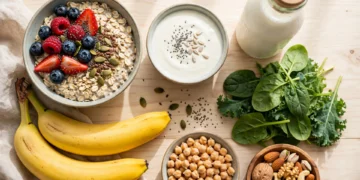
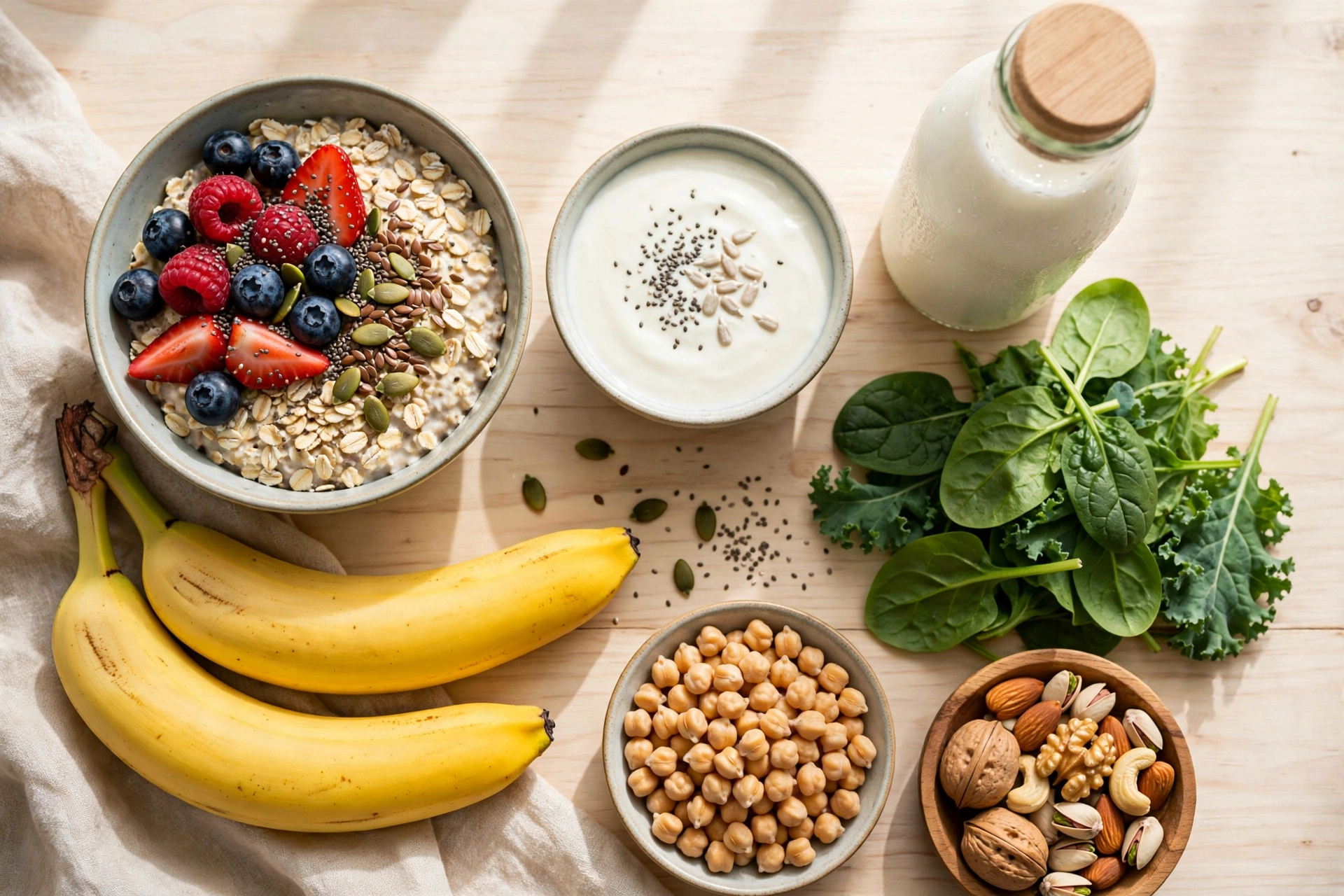
Food is the most powerful tool for gut health. Start with fibre, because fibre feeds your gut microbes. The NHS recommends 30g of fibre a day for adults. Most UK adults eat much less, so build up slowly. For example, add one high-fibre food to each meal, rather than changing everything at once.
Good fibre sources include oats, wholemeal bread, brown rice, beans, lentils, chickpeas, fruit, vegetables, nuts, and seeds. Try to eat at least five portions of fruit and vegetables a day. The NHS guide to foods that help digestion explains these choices in more detail.
Variety matters too. Aim for 30 different plant foods a week if you can. This target counts herbs, spices, nuts, seeds, grains, and pulses as well as fruit and vegetables. For example, porridge with berries and seeds already includes several plant foods.
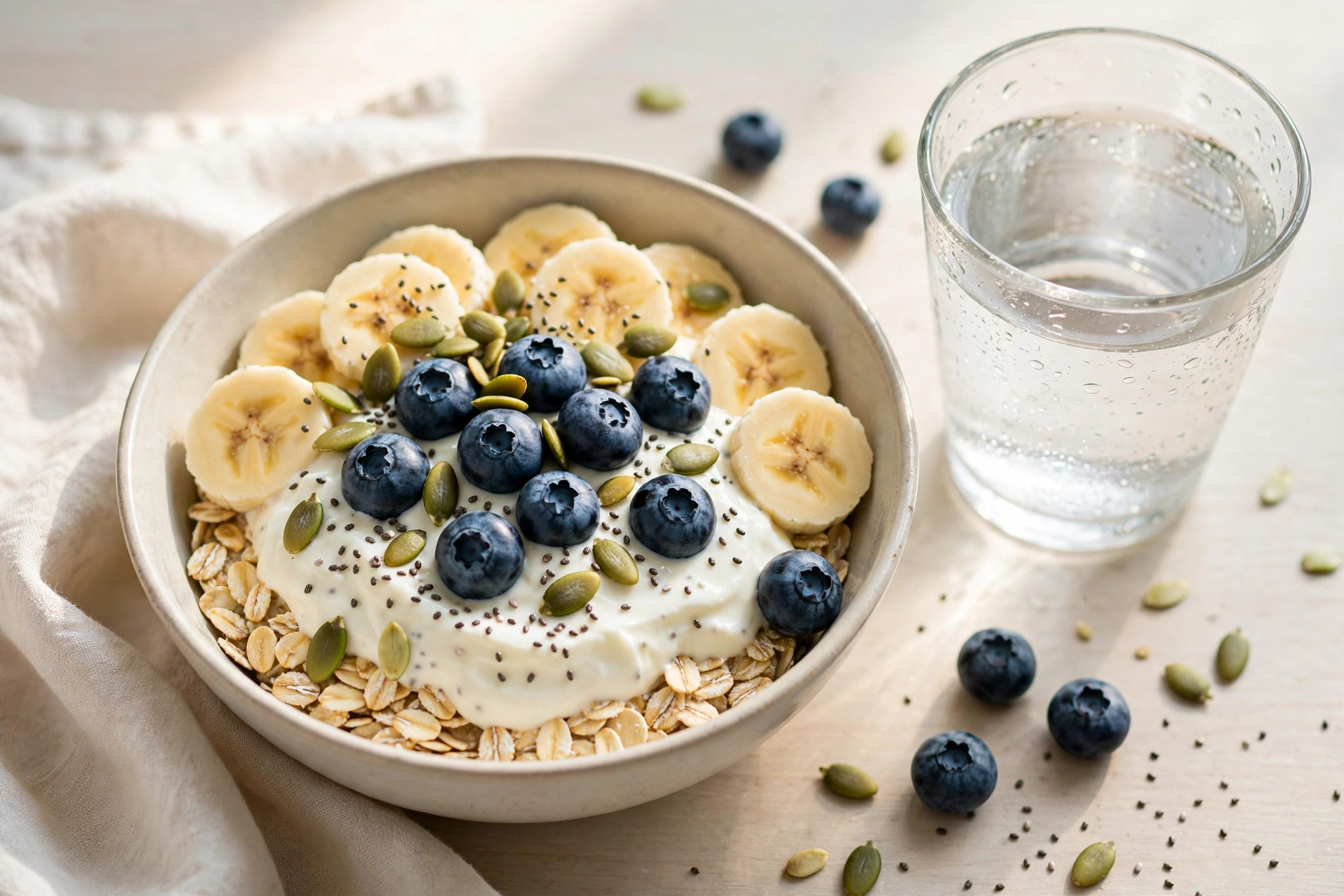
Start your day with a gut-friendly breakfast. Oats, Greek yoghurt, berries, and seeds make a simple and filling meal. For more ideas, read these healthy breakfast ideas from Health Bloom. They show how to build balanced mornings without long cooking times. In addition, a regular breakfast can help your bowel routine stay steady.
Add Fermented and Prebiotic Foods
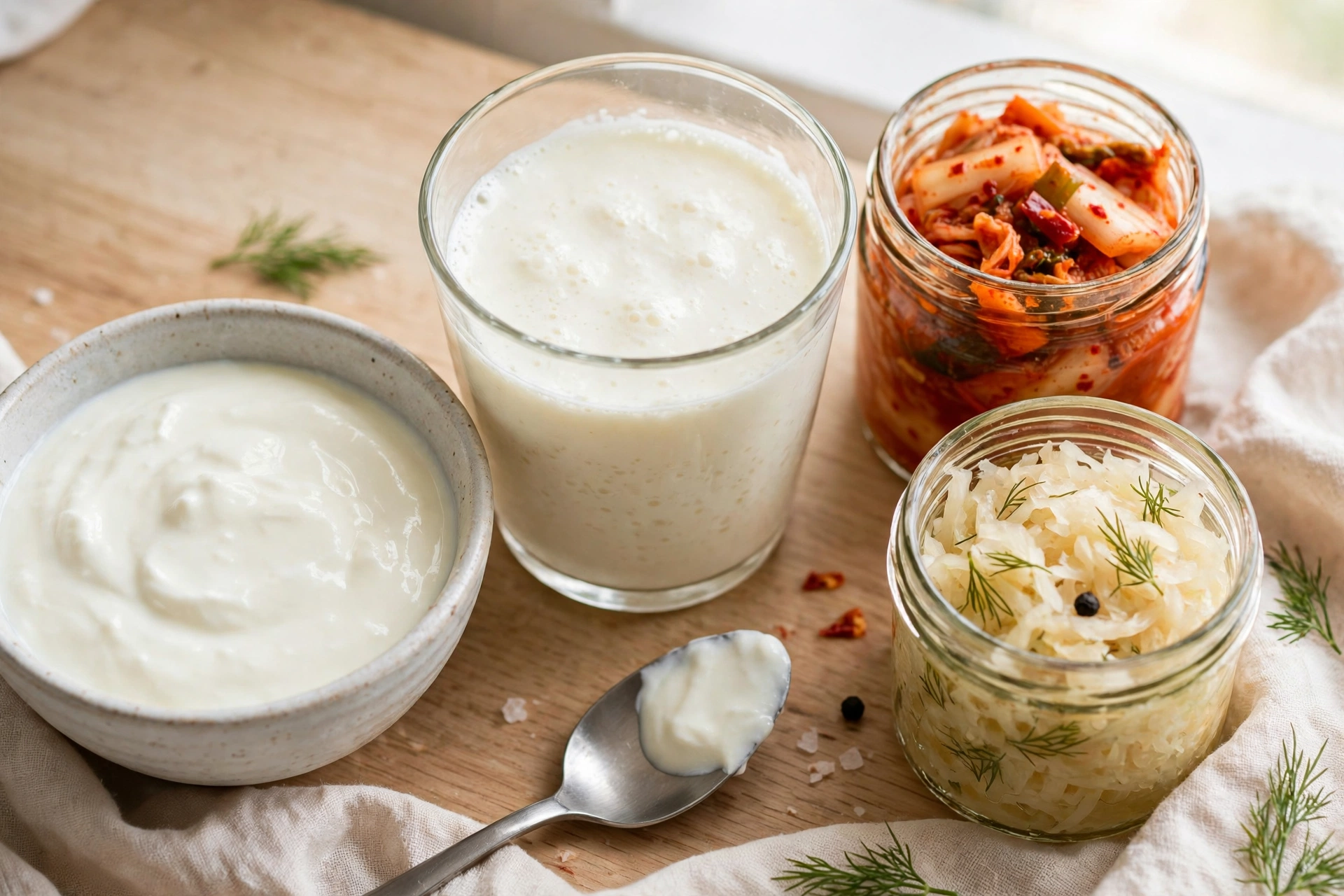
Fermented foods contain live microbes, while prebiotic foods feed the microbes you already have. You need both for a balanced approach. For example, live yoghurt, kefir, kimchi, sauerkraut, and miso can add live cultures to your diet. Start with small portions, especially if you do not eat these foods often.
Prebiotic foods include onions, garlic, leeks, asparagus, bananas, oats, and beans. These fibres feed gut bacteria and can support diversity over time. However, some people with IBS find large amounts trigger symptoms. Therefore, increase them slowly.
The British Dietetic Association notes that more fibre and a wider range of foods can support gut bacterial diversity. Instead, build on everyday foods you enjoy. For example, add beans to a stew or seeds to yoghurt. Learning how to improve gut health naturally is easier when meals stay simple.
Drink Enough and Move Every Day
Fluid helps fibre do its job. Without enough water, fibre can make constipation worse. Therefore, drink water through the day, and have a glass with meals. Herbal teas and soups can also count towards your fluid intake. However, limit very sugary drinks and large amounts of caffeine if they upset your stomach.
Movement also supports gut health. A daily walk can help your bowel move regularly. In addition, movement can reduce stress and improve sleep, and both affect your gut. You do not need intense exercise. For example, brisk walking, cycling, swimming, or gardening all count.
The NHS advises adults to aim for at least 150 minutes of moderate activity a week, or 75 minutes of vigorous activity. You can read the full NHS physical activity guidelines for adults for details. Start with short walks if you do little exercise. Next, add a few minutes each week. Finally, build a routine you enjoy, because consistency matters more than intensity.
Sleep, Stress, and the Gut-Brain Axis
Your gut and brain send signals to each other all day. Stress can speed up or slow down your gut. Similarly, poor sleep can change appetite, food choices, and bowel habits. Therefore, sleep and stress control form a key part of how to improve gut health naturally.
Aim for a regular sleep routine. Go to bed and wake up at similar times, even at weekends. In addition, reduce screens for 30 to 60 minutes before bed. A dark, cool room can also help. If poor sleep continues, speak to a healthcare professional rather than relying on supplements alone.
Stress control does not need to be complex. For example, try a short walk outside, slow breathing, or time with friends. Similarly, regular meals can help, because rushing food can upset digestion. For broader habit ideas, see this guide to better health.
Some people explore magnesium for sleep support. Research is still developing, so read the evidence with care. Health Bloom explains it in its guide to magnesium L-threonate. If you take medicine, ask a pharmacist or GP first.
Do You Need a Probiotic Supplement?
A key part of how to improve gut health naturally is knowing when supplements help and when food is enough. Probiotics are live microbes that may benefit health when you take enough of them. Food sources, such as live yoghurt and kefir, suit most healthy adults. Supplements may help some people, for example after antibiotics or with certain IBS symptoms. However, evidence varies by strain, dose, and condition. Therefore, no single product suits everyone.
If you try a probiotic, check the strain names and the live count at the end of shelf life. Take it daily for at least four weeks before you judge it. In addition, keep your diet varied, because a supplement cannot replace fibre.
Be careful with bold claims. A product that promises to cure disease overnight deserves scepticism. Real gut health builds slowly, and daily habits often matter more than any capsule. You can learn more in Health Bloom’s guide to collagen supplements.
A Simple 7-Day Gut Health Plan
Use this plan as a flexible template, not a strict rule. Swap foods to suit your taste, budget, and dietary needs.
- Day 1: Porridge with berries and seeds, plus a walk after lunch.
- Day 2: Lentil soup with wholemeal bread and live yoghurt.
- Day 3: Overnight oats, a vegetable stir-fry, and an earlier bedtime.
- Day 4: Beans on wholemeal toast, a salad with herbs, and 30 minutes of movement.
- Day 5: Kefir or live yoghurt, whole grains, and an evening walk.
- Day 6: A bean and vegetable stew, fruit for dessert, and plenty of water.
- Day 7: Review what worked and repeat your favourite meals.
For a simple snack, try this easy pumpkin seed recipe. In addition, keep meals regular and chew food well, because rushed eating can increase bloating.
Common Mistakes to Avoid
Many people make gut health harder than it needs to be. First, they increase fibre too fast. This change can cause wind and bloating. Therefore, build up over two to three weeks. Next, they cut out whole food groups without advice. This step can reduce variety and make symptoms worse. Finally, they expect instant results. Gut microbes change over weeks, not hours.
Another mistake is to focus only on supplements. A probiotic cannot fix a diet low in fibre, poor sleep, and high stress. Focus on daily habits first.
Conclusion
Learning how to improve gut health naturally comes down to consistency. Eat more fibre, enjoy many plant foods, add fermented foods slowly, drink enough water, move daily, sleep well, and manage stress. These steps support your gut microbes and your overall wellbeing. In addition, they fit easily into a normal UK routine.
Start with one change this week to learn how to improve gut health naturally in practice. For example, add seeds to breakfast, walk after lunch, or set a regular bedtime. Next week, add another habit. Over time, these small steps can lead to steadier digestion and better energy. If symptoms persist or worry you, speak to your GP for personal advice.
FAQs
How long does it take to improve gut health naturally?
Most people need two to four weeks to notice changes. Fibre, sleep, and movement work slowly. Therefore, stay consistent. If nothing improves, speak to a healthcare professional.
What are the best foods for gut health?
The best foods include oats, beans, lentils, fruit, vegetables, whole grains, nuts, seeds, live yoghurt, and kefir. Variety matters most. For example, mix different plant foods across the week.
Can stress really affect my gut?
Yes, stress can affect gut movement, sensitivity, and appetite. The gut-brain axis links your brain and digestive system. Therefore, stress control, regular sleep, and daily walks can support gut health as well as mood.
Do I need to take a probiotic every day?
No, most healthy adults do not need a daily probiotic. Live yoghurt and kefir can provide live cultures through food. If you try a supplement, use it daily for at least four weeks. In addition, keep eating fibre-rich foods.
Is fibre bad if I have IBS?
Fibre affects people with IBS in different ways. Soluble fibre from oats may suit many people better than large amounts of bran. Therefore, increase fibre slowly. If symptoms worsen, ask a GP or dietitian for advice.
When should I see a doctor about gut symptoms?
See your GP if symptoms last for weeks, change suddenly, or include blood in your stool, unexplained weight loss, or severe pain. These signs need proper checks.
For more updates visit: HEALTH BLOOM








Discussion about this post