














Weight loss peptides have become a popular topic in health discussions. Many people search for them because they want to understand how newer medicines can affect appetite and body weight. However, the term can mean different things online.
Some peptide-based medicines have approval for specific medical uses. Other products sold as “peptides” may not have approval for use in people. This difference matters when you are looking at safety and effectiveness.
In the UK, medicines such as semaglutide and tirzepatide can help eligible patients manage certain health conditions. They work on hormone pathways linked to appetite, digestion and blood sugar. A qualified healthcare professional should guide their use.
What Are Weight Loss Peptides?
Weight loss peptides usually refers to substances that affect hormone pathways linked to appetite and metabolism. Some approved medicines use peptide-based compounds to produce these effects.
GLP-1 medicines are one important example. They copy some of the actions of a natural hormone called GLP-1. This hormone helps the body respond after eating.
Tirzepatide works in a related way. It targets two hormone pathways called GLP-1 and GIP. These actions can affect appetite, blood sugar and feelings of fullness.
Still, not every product called a weight loss peptide has the same status. Some products sold online may remain experimental or unapproved.
How Do GLP-1 Medicines Work?
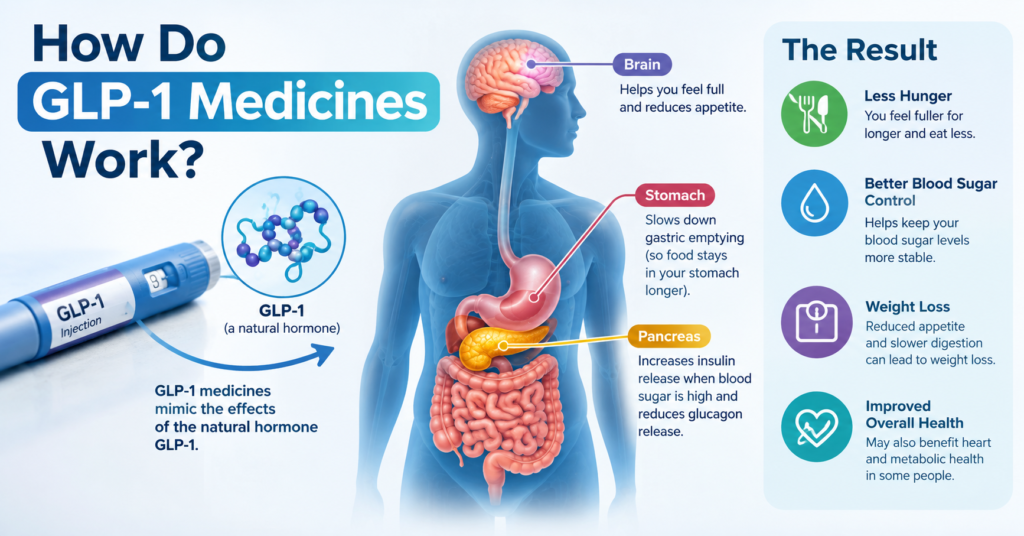
GLP-1 is a hormone that the body releases after eating. It helps control blood sugar and can also affect appetite. Medicines that act on this pathway can increase feelings of fullness and reduce appetite.
Semaglutide is one well-known example. Doctors use different semaglutide products for different medical purposes. Wegovy has approval for weight management in eligible patients. Other semaglutide products have different approved uses.
Tirzepatide works on both GLP-1 and GIP receptors. This gives it a slightly different action from medicines that target GLP-1 alone.
These medicines do not work as simple “fat burners.” They affect body processes that can influence hunger, food intake and blood sugar.
Weight Loss Peptides in the UK
UK healthcare providers use prescription weight-management medicines for people who meet certain medical criteria. A healthcare professional may consider factors such as BMI, health conditions and other medicines before recommending treatment.
Weight-management medicine also works best as part of a wider health plan. A doctor or other qualified professional can discuss food, activity, lifestyle and other health needs alongside treatment.
The specific medicine also matters. A drug approved for diabetes does not automatically become a general weight-loss treatment. Each product has its own approved uses and safety information.
Are All Weight Loss Peptides Approved?
No. This is one of the most important points to remember.
The word “peptide” does not mean that a product has medical approval. Some websites promote products as research peptides and make strong claims about weight loss. Those claims do not prove that the product is safe or effective for people.
Approved medicines go through regulatory checks before healthcare professionals can use them for their authorised purposes. Experimental products do not have the same status.
People should therefore look at the medicine’s regulatory status rather than trusting the word “peptide” on a website or social media post.
Common Side Effects
Prescription medicines that affect GLP-1 pathways can cause side effects. Stomach and digestive problems are among the most common issues.
Some people may experience nausea, vomiting, diarrhoea or constipation. These effects can vary from person to person. A healthcare professional can explain what to expect and when to seek help.
More serious problems can also occur, although they happen less often. Anyone taking a prescription medicine should follow the instructions from their healthcare professional.
People should also avoid changing a prescribed dose on their own. If a medicine causes worrying symptoms, they should contact their healthcare provider for advice.
Why Online Peptides Can Be Risky
The internet contains many claims about weight loss peptides. Some sellers describe products as powerful solutions for losing weight. However, an online claim does not prove that a product contains what the seller says it contains.
Unregulated products can have unknown ingredients or incorrect strengths. Counterfeit medicines can also create serious health risks.
Social media can make this problem harder to spot. A product may look professional and still lack proper medical approval.
For this reason, people should not treat an online research product as the same thing as a licensed prescription medicine.
Weight Loss Peptides and Research Peptides
A research peptide and an approved medicine are not the same thing. Research products may exist for laboratory or scientific work. They may not have approval for treating people.
Online sellers sometimes use research language while making claims about weight loss. However, these claims can go beyond the available medical evidence.
The key question should not simply be, “Is this a peptide?” Instead, ask whether the product has approval for human use and whether a healthcare professional considers it suitable.
This approach can help people avoid confusing experimental products with established medical treatments.
Can Everyone Use Weight Loss Peptides?
No. Prescription weight-management medicines do not suit everyone.
A healthcare professional can look at a person’s age, health history, current medicines and other factors before recommending treatment. These details can change which options are suitable.
Young people need extra care. Children and teenagers should not copy adult weight-loss treatments they see online. Their bodies continue to grow and develop, so their health needs can differ from those of adults.
If a young person feels worried about weight or body changes, talking to a parent, guardian, doctor or another trusted adult is a safer choice than trying weight-loss products without medical guidance.
Why Medical Guidance Matters
Medical guidance helps people understand whether a treatment makes sense for them. It also gives healthcare professionals a chance to monitor side effects and review progress.
A doctor or pharmacist can explain how to use a prescribed medicine correctly. They can also check whether it may interact with other medicines or cause problems because of an existing health condition.
This support becomes even more important when a medicine affects appetite, digestion and blood sugar.
People should never use an experimental peptide simply because someone online says that it worked for them. Individual experiences do not replace medical evidence or professional advice.
A Healthy Approach to Weight Management
Weight management involves more than a number on a scale. Overall health, energy, sleep, food choices and daily activity all matter.
Some adults may benefit from prescription treatment when they meet the medical criteria. Others may need different forms of support. A healthcare professional can help identify the most suitable approach.
Young people should take a different approach. During the teenage years, the body naturally changes as it grows. Focusing on healthy habits and overall wellbeing is more appropriate than following online weight-loss trends.
There is no need to chase rapid changes or copy a treatment designed for someone else.
Conclusion
Weight loss peptides cover a wide range of products and ideas. Some peptide-based medicines, including semaglutide and tirzepatide, have approved medical uses in the UK. Other products marketed online may not have approval for use in people.
The safest approach is to understand the difference between licensed medicines and experimental products. People should also avoid relying on social media claims when making health decisions.
For adults who may need medical weight management, a qualified healthcare professional can explain suitable options. For teenagers and younger people, professional support and healthy development should remain the main focus.
FAQs
What are weight loss peptides?
Weight loss peptides is a broad term for substances that can affect biological pathways linked to appetite, digestion or metabolism. Some approved medicines use peptide-based compounds, while other products may remain experimental.
Are weight loss peptides approved in the UK?
Some peptide-based medicines have approval for specific medical uses in the UK. However, not every product sold online as a peptide has approval for human use.
Is semaglutide a peptide?
Yes. Semaglutide is a peptide-based medicine that acts on the GLP-1 receptor. Different semaglutide products have different approved uses.
Is tirzepatide a weight loss peptide?
Tirzepatide is a peptide-based medicine that acts on GLP-1 and GIP pathways. Healthcare professionals may prescribe it for approved medical uses in eligible patients.
Are research peptides safe for weight loss?
Research peptides should not automatically be treated as safe weight-loss medicines. A research product may not have approval for use in people and may have limited safety information.
What side effects can GLP-1 medicines cause?
Common side effects can include nausea, vomiting, diarrhoea and constipation. Some people may experience more serious problems, so prescribed medicines should always be used according to professional guidance.
Can teenagers use weight loss peptides?
Teenagers should not use weight-loss medicines without appropriate medical advice. Young people are still growing, so their health needs can differ from those of adults.
Can you buy weight loss peptides online?
Some websites advertise peptide products online. However, online availability does not prove that a product is genuine, safe or approved for human use.
Do weight loss peptides work for everyone?
No. Prescription medicines affect people differently and may not suit everyone. A healthcare professional can decide whether a particular treatment is appropriate.
What is the safest way to manage weight?
The right approach depends on a person’s age and health. Adults with medical concerns can discuss treatment options with a healthcare professional. Young people should focus on healthy development and seek support from a trusted adult or healthcare professional when needed.
For more updates visit: HEALTH BLOOM











Discussion about this post