









Finding the best iron supplement can feel confusing because many products contain different forms and amounts of iron. Some are designed for general nutritional support, while others are used to treat confirmed iron deficiency.
The right choice depends on your iron levels, diet, age, health needs and tolerance. Women may also have higher iron needs during their reproductive years, particularly when they have heavy periods.
Before starting an iron supplement, it is important to understand why you need it. Taking more iron does not always provide greater benefits. In fact, excessive iron can cause side effects and may be harmful.
What Does Iron Do in the Body?
Iron is an essential mineral that helps your body make haemoglobin. Haemoglobin is found in red blood cells and carries oxygen around the body.
When your body does not have enough iron, you may develop iron deficiency. If the deficiency becomes significant, it can lead to iron deficiency anaemia.
Common symptoms can include tiredness, low energy, headaches, shortness of breath and heart palpitations. However, these symptoms can have many causes, so they do not automatically mean that you need an iron supplement.
A blood test can help confirm iron deficiency or anaemia. If your results show a problem, a GP can help identify the cause and recommend suitable treatment.
What Is the Best Iron Supplement?
There is no single product that is the best iron supplement for everyone. The most suitable option depends on the amount of iron you need and how well you tolerate it.
Common forms include ferrous sulfate, ferrous fumarate and ferrous gluconate. These provide iron in different forms and strengths.
Ferrous sulfate is commonly used to treat or prevent iron deficiency anaemia. Other forms may also be suitable, particularly if you experience unwanted effects with one type.
The amount of elemental iron matters more than simply looking at the total weight of an iron compound. Therefore, check the product label carefully rather than comparing products only by the number of milligrams shown on the front.
Best Iron Supplement for Women
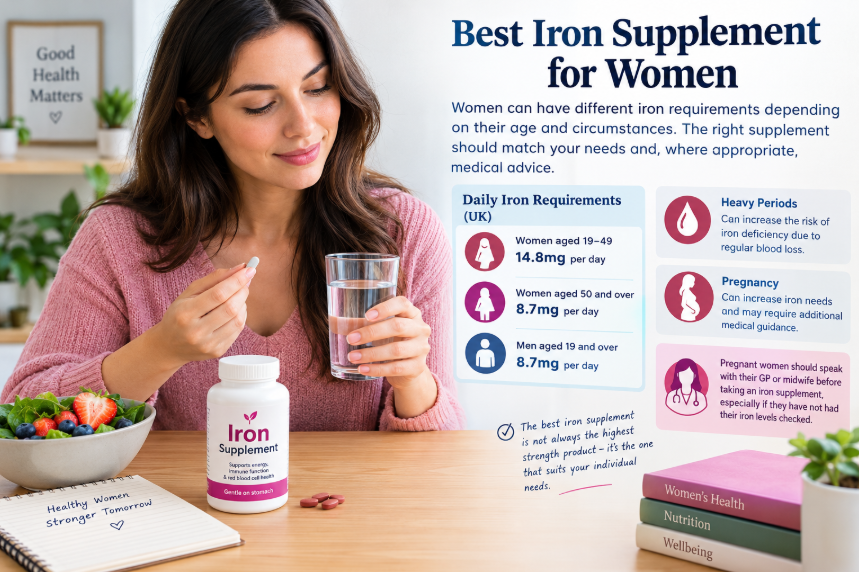
Women can have different iron requirements depending on their age and circumstances. In the UK, women aged 19 to 49 need about 14.8mg of iron per day, while women aged 50 and over generally need 8.7mg.
Men aged 19 and over generally need 8.7mg per day.
Women who have heavy periods may have a higher risk of iron deficiency because of regular blood loss. Pregnancy can also increase the need for iron and may require additional medical guidance.
For these reasons, the best iron supplement for women is not necessarily the highest-strength product. A suitable supplement should match the person’s nutritional needs and, where appropriate, medical advice.
Pregnant women should speak with their GP or midwife before taking an iron supplement, especially if they have not had their iron levels checked.
Different Types of Iron Supplements
Ferrous Sulfate
Ferrous sulfate is a common form of iron used for iron deficiency anaemia. It is available from pharmacies and may also be prescribed.
It can work well, but some people experience constipation, nausea, stomach discomfort or diarrhoea. Taking it with food may reduce stomach problems, although iron is generally absorbed better on an empty stomach.
Ferrous Fumarate
Ferrous fumarate is another form of iron used in supplements and medicines. It provides a concentrated source of elemental iron.
The appropriate dose depends on the product and the reason for taking it. Always follow the product instructions or advice from a healthcare professional.
Ferrous Gluconate
Ferrous gluconate is another commonly available form. Some people may find one iron compound easier to tolerate than another.
If one product causes persistent stomach problems, speak with a pharmacist or GP before changing the dose or type.
How to Choose an Iron Supplement
Start by checking how much elemental iron the product provides. A higher number does not automatically make a supplement better.
Next, consider the reason you are taking iron. Someone with confirmed iron deficiency anaemia may need a different dose from someone who simply wants nutritional support.
Tolerance also matters. Iron can cause constipation, nausea, abdominal discomfort and changes in bowel movements. If these effects make it difficult to continue treatment, a pharmacist or GP can discuss alternatives.
Finally, consider the form of the supplement. Tablets, capsules and liquid preparations are available. Your choice may depend on convenience and how easily you can swallow tablets.
How to Take Iron for Better Absorption
Iron is generally absorbed best when taken on an empty stomach. However, some people develop stomach discomfort when they take it without food.
If this happens, taking iron with or after food may make it easier to tolerate.
Tea and coffee can reduce iron absorption. Dairy products and eggs can also interfere with absorption. Leaving a suitable gap between these foods or drinks and your iron supplement can help.
Vitamin C may improve iron absorption. Some healthcare professionals may suggest taking iron with orange juice or another source of vitamin C.
Certain medicines and mineral supplements can also interact with iron. If you take calcium, magnesium, zinc, antacids or prescription medicines, ask a pharmacist about the appropriate timing.
Iron Supplement Side Effects
Iron supplements can cause digestive side effects. Constipation is particularly common, although some people experience diarrhoea instead.
Other possible effects include nausea, stomach pain and heartburn. Darker stools are also common when taking iron.
Do not simply increase your dose because you want faster results. High amounts of iron can be harmful, and accidental overdose can be especially dangerous for children.
If side effects are severe or persistent, speak with a healthcare professional. They may suggest changing the timing, dose or type of iron.
Do You Need an Iron Supplement?
Not everyone needs an iron supplement. A varied diet can provide iron from foods such as meat, beans, lentils, nuts, fortified cereals and dried fruit.
If you regularly feel tired or have symptoms that concern you, avoid assuming that iron is the cause. A GP can arrange blood tests and investigate other possible causes.
This is particularly important because anaemia can result from several different nutritional deficiencies or medical conditions.
If iron deficiency is confirmed, treatment should also address why your iron levels became low in the first place.
When Should You Speak to a Doctor?
Speak with a GP if you think you may have iron deficiency anaemia. Medical advice is particularly important if you have unexplained tiredness, heavy periods, blood loss or persistent digestive symptoms.
You should also ask a healthcare professional before taking iron if you have a condition that affects iron storage or absorption.
People with conditions such as haemochromatosis or certain types of anaemia may need to avoid iron unless a clinician recommends it.
If you are already taking prescribed iron, follow your healthcare professional’s instructions rather than replacing it with another supplement.
Conclusion
The best iron supplement depends on your individual needs rather than the highest dose or most heavily marketed product.
Ferrous sulfate, ferrous fumarate and ferrous gluconate are common options. However, the right choice depends on your iron status, reason for supplementation and tolerance.
Women may have greater iron needs during their reproductive years, especially when heavy periods cause regular blood loss. Pregnancy also requires additional consideration.
If you suspect an iron deficiency, getting appropriate medical advice and blood testing is a better starting point than taking high-dose iron on your own.
FAQs
What is the best iron supplement?
The best iron supplement depends on why you need iron, your iron levels and how well you tolerate the product. Ferrous sulfate, ferrous fumarate and ferrous gluconate are commonly used forms.
What is the best iron supplement for women?
The best iron supplement for women depends on individual needs. Women aged 19 to 49 generally need more dietary iron than men and older women. Heavy periods can also increase the risk of deficiency.
Is ferrous sulfate a good iron supplement?
Ferrous sulfate is a commonly used treatment for iron deficiency anaemia. However, it can cause digestive side effects in some people. A pharmacist or GP can advise whether it is appropriate for you.
Should I take iron every day?
The correct schedule depends on the product and reason for taking iron. Some people may be advised to take iron daily, while healthcare professionals may recommend a different schedule when side effects occur.
Should iron be taken with food?
Iron is generally absorbed better on an empty stomach. However, taking it with or after food can reduce stomach discomfort. Follow the instructions provided with your medicine or supplement.
Can I take iron with tea or coffee?
Tea and coffee can reduce iron absorption. It is generally recommended to leave a gap between taking iron and consuming these drinks.
For more updates visit: HEALTH BLOOM








Discussion about this post