











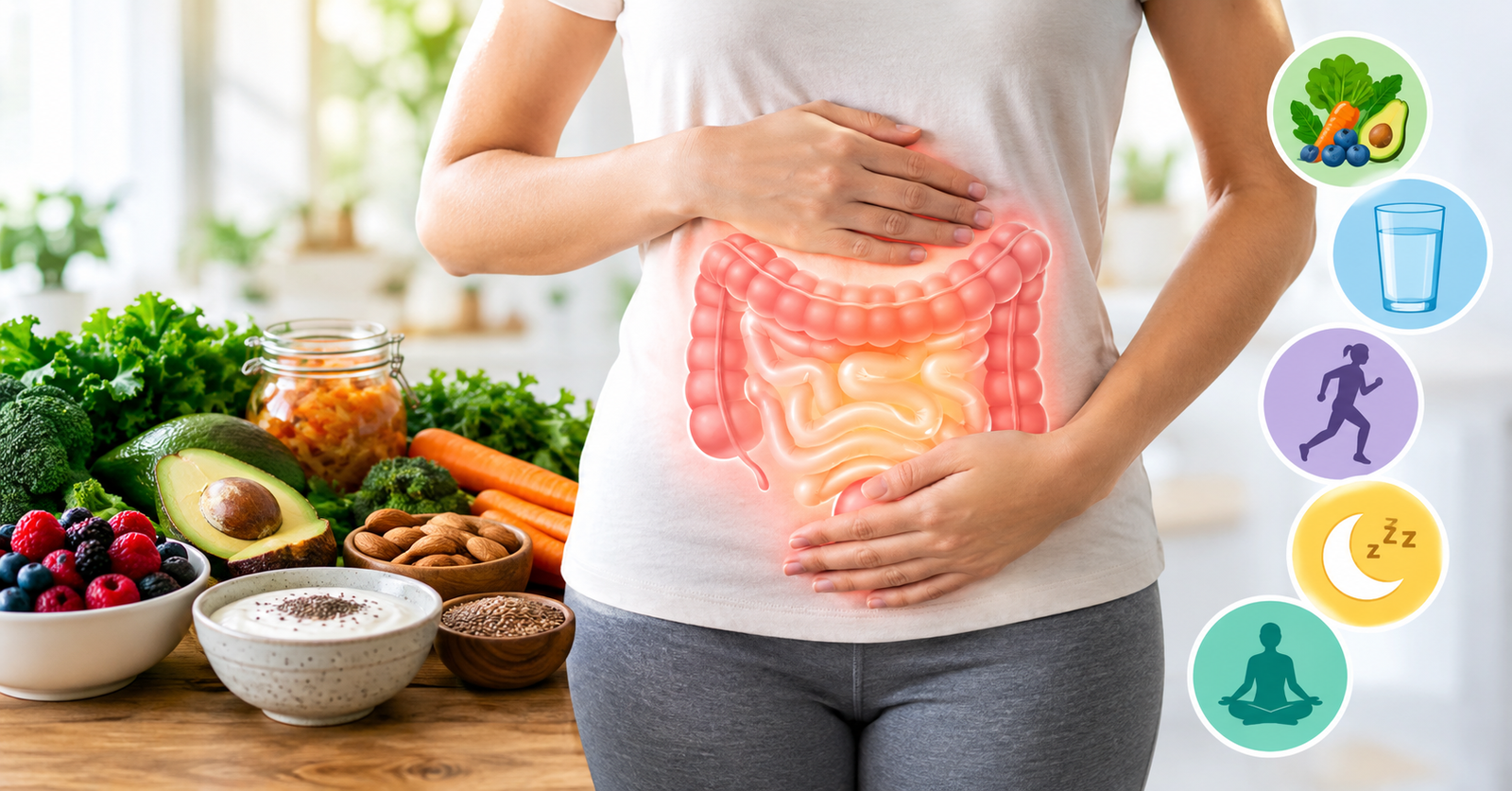
Learning how to improve gut health can make a positive difference to your overall wellbeing. Your gut contains trillions of microorganisms that interact with food, digestion and many other systems in the body. A healthy gut depends on a varied diet, regular movement, good sleep and consistent daily habits.
The good news is that improving gut health does not usually require complicated routines. Small changes, such as eating more fibre-rich foods and including a wider variety of plants, can support a healthier gut environment. This guide explains practical ways to improve gut health naturally and build habits that are realistic for everyday life.
How to Improve Gut Health Naturally
Eat More Fibre-Rich Foods
One of the most useful ways to improve gut health is to eat enough dietary fibre. Fibre passes through the digestive system and provides nourishment for beneficial gut bacteria. It can also help support regular bowel movements.
Vegetables, fruits, beans, lentils, whole grains, nuts and seeds are useful sources of fibre. Try increasing these foods gradually rather than making a sudden change. A gradual increase can make it easier for your digestive system to adjust.
Eat a Wider Variety of Plant Foods
Variety matters when it comes to gut health. Different plant foods contain different types of fibre and natural compounds that can interact with the gut microbiome.
Instead of eating the same vegetables and fruits every week, try adding different colours and varieties to your meals. Beans, oats, berries, leafy vegetables, whole grains, nuts and seeds can all contribute to a diverse diet.
Include Fermented Foods
Fermented foods can be another useful part of a gut-friendly diet. Some fermented foods contain live cultures, although the amount and type of microorganisms can vary between products.
Natural yoghurt with live cultures, kefir, sauerkraut and other fermented foods can be included as part of a balanced diet. If you are not used to fermented foods, start with small amounts and see how your body responds.
Drink Enough Water
Hydration plays an important role in digestive health. Water helps keep stools softer and supports normal movement through the digestive tract.
Your fluid needs can vary depending on your activity level, weather and diet. Drinking regularly throughout the day is a simple habit that can support digestion, particularly when you are increasing your fibre intake.
Reduce Highly Processed Foods
You do not need to completely avoid processed foods to improve gut health. However, a diet that relies heavily on foods high in added sugars, salt and saturated fat may leave less room for fibre-rich and nutrient-dense foods.
Try focusing on what you can add rather than simply what you should remove. Adding vegetables, fruit, whole grains, pulses and other minimally processed foods can naturally improve the overall quality of your diet.
Lifestyle Habits That Support Gut Health

Stay Physically Active
Regular physical activity can support normal digestion and overall health. You do not need an intense exercise programme to become more active.
Walking, cycling, swimming, recreational sports and other enjoyable activities can help you stay active. Consistency is often more useful than choosing an exercise routine that feels difficult to maintain.
Get Enough Sleep
Sleep is another important part of a healthy lifestyle. Poor sleep can affect many aspects of wellbeing, and maintaining a regular sleep routine can help support your body’s normal functions.
Try to keep a consistent bedtime and wake-up time where possible. Creating a calm evening routine and limiting unnecessary screen use before bed may also make it easier to maintain good sleep habits.
Manage Everyday Stress
Stress can affect how some people experience digestive symptoms. You may notice changes in appetite, bowel habits or stomach comfort during stressful periods.
Finding healthy ways to manage stress can therefore be useful. Walking, breathing exercises, hobbies, spending time outdoors and talking with someone you trust can all be part of a balanced approach to managing everyday pressure.
What Foods Are Good for Gut Health?
A gut-friendly diet does not need to follow a strict menu. The main goal is to create variety and include foods that provide fibre and useful nutrients.
Whole grains such as oats and wholemeal bread can provide fibre. Fruits and vegetables add different types of fibre and plant compounds. Beans, chickpeas and lentils are also valuable choices, while nuts and seeds can add fibre and healthy fats.
Yoghurt containing live cultures and other fermented foods can also fit into a balanced diet. The best approach is to build meals around a broad range of nutritious foods rather than relying on one specific food or drink.
Can You Improve Gut Health Quickly?
Gut health generally improves through consistent habits rather than overnight changes. Some people may notice improvements in digestion after changing their diet, while others may take longer.
If you increase fibre, do it gradually and drink enough fluid. A sudden increase in fibre can cause temporary bloating or discomfort for some people. Giving your body time to adapt can make the transition easier.
It is also important to remember that digestive symptoms can have many different causes. Persistent or severe symptoms should not simply be treated as a gut health problem without proper medical advice.
Common Mistakes When Improving Gut Health
One common mistake is making too many dietary changes at once. When several foods are added or removed together, it becomes difficult to understand what is affecting your digestion.
Another mistake is focusing on expensive supplements instead of everyday food and lifestyle habits. Supplements may have a role in certain situations, but they are not a substitute for a balanced diet.
Finally, avoid expecting perfection. Your gut health does not depend on eating perfectly every day. A varied diet, regular activity, adequate sleep and sensible eating habits are more realistic goals.
When to Speak to a Doctor
Changes in digestion are common, but ongoing or concerning symptoms deserve attention. Speak with a healthcare professional if you have persistent abdominal pain, unexplained weight loss, blood in your stool, ongoing diarrhoea or constipation, repeated vomiting or other symptoms that worry you.
A doctor can help identify whether an underlying condition is causing your symptoms. This is particularly important if symptoms continue despite changes to your diet and lifestyle.
Conclusion
Knowing how to improve gut health starts with simple, sustainable habits. Eating a varied diet rich in fibre, including suitable fermented foods, staying hydrated and maintaining regular physical activity can all support digestive wellbeing.
Sleep and stress management also matter because gut health is influenced by more than food alone. Rather than searching for a quick fix, focus on building healthy habits that you can maintain over time. If digestive symptoms persist or become concerning, professional medical advice is the safest next step.
FAQs
What is the best way to improve gut health?
The best approach is to eat a varied, fibre-rich diet while staying hydrated and physically active. Good sleep and stress management can also support overall digestive health.
How long does it take to improve gut health?
There is no single timeframe because everyone responds differently. Some people may notice changes relatively quickly, while longer-term improvements depend on consistent diet and lifestyle habits.
Are bananas good for gut health?
Bananas can be part of a healthy diet and provide fibre and other nutrients. They can fit well into a varied eating pattern that includes a range of fruits and vegetables.
Is yoghurt good for gut health?
Yoghurt containing live cultures can be included in a balanced diet. Check the product label because not every yoghurt contains the same cultures or nutritional profile.
Does drinking water improve gut health?
Adequate hydration supports normal digestion and can help maintain regular bowel movements. Drinking enough fluid becomes particularly important when you increase your fibre intake.
Is fibre important for gut health?
Yes. Fibre supports normal bowel function and can provide nourishment for beneficial microorganisms in the gut. Good sources include vegetables, fruit, beans, lentils and whole grains.
Can exercise improve gut health?
Regular physical activity supports overall health and can also help maintain normal digestive function. Walking and other moderate activities can be useful options.
Can stress affect gut health?
Stress can influence digestive symptoms in some people. Managing everyday stress through healthy activities, relaxation and sufficient sleep may support better overall wellbeing.
Should I take probiotics to improve gut health?
Probiotics are not necessary for everyone, and different probiotic products contain different microorganisms. If you are considering a supplement, especially because of ongoing symptoms, speak with a healthcare professional first.
What should I avoid for better gut health?
There is no single food that everyone needs to avoid. Instead, focus on a varied diet and limit excessive reliance on highly processed foods, while paying attention to foods that personally cause digestive discomfort.
For more updates visit: HEALTH BLOOM











Discussion about this post