














Full mouth dental implants can restore your smile when many or all teeth are missing or badly damaged. Unlike traditional dentures, implants use small titanium posts placed into the jawbone to support replacement teeth.
The treatment can improve chewing, speech and dental function. It can also provide a more secure feel than removable dentures.
However, full mouth treatment is a major dental procedure. The right approach depends on your oral health, bone levels, remaining teeth and treatment goals. Cost also varies widely across the UK, so understanding the process can help you plan with confidence.
What Are Full Mouth Dental Implants?
Full mouth dental implants replace most or all teeth in the upper jaw, lower jaw, or both. The treatment does not always mean placing one implant for every missing tooth.
Instead, dentists can use several strategically positioned implants to support a fixed bridge or full arch of replacement teeth. This approach can reduce the number of implants needed while providing a stable foundation.
The exact design depends on your jawbone, bite, gum health and the type of restoration selected. Your dentist will normally assess these factors before recommending treatment.
How Do Full Mouth Dental Implants Work?
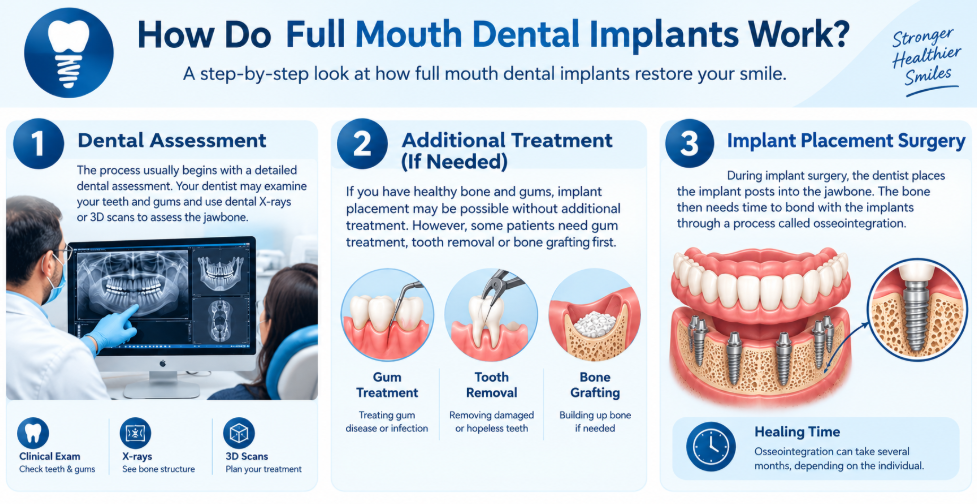
The process usually begins with a detailed dental assessment. Your dentist may examine your teeth and gums and use dental X-rays or 3D scans to assess the jawbone.
If you have healthy bone and gums, implant placement may be possible without additional treatment. However, some patients need gum treatment, tooth removal or bone grafting first.
During implant surgery, the dentist places the implant posts into the jawbone. The bone then needs time to bond with the implants through a process called osseointegration.
Once healing has progressed, the dentist can attach a fixed bridge or another full-arch restoration. The final teeth are designed to provide a natural appearance and practical chewing function.
Who May Need Full Mouth Dental Implants?
This treatment may suit adults who have lost many teeth or have teeth that cannot be saved. It can also be considered when conventional dentures cause problems with stability or comfort.
Good general oral health is important. Your dentist will also assess bone density, gum condition, smoking habits and other factors that could affect healing.
Having insufficient bone does not automatically rule out treatment. Some patients may qualify for bone grafting or other procedures before implant placement.
A thorough examination is therefore essential before making a treatment decision.
Benefits of Full Mouth Dental Implants
One major benefit is stability. Fixed implant-supported teeth do not move around in the same way as conventional removable dentures.
Implants can also help restore chewing function. This may make it easier to eat a wider range of foods after treatment and recovery.
Another advantage is that implant-supported teeth can look similar to natural teeth. Your dentist can consider tooth shape, colour and gum appearance when planning the restoration.
Implants also transfer chewing forces to the jawbone. This can help reduce the bone loss that commonly follows tooth loss, although results vary between patients.
Dental Implants Cost in the UK
The dental implants cost can vary significantly depending on the treatment required. Full mouth treatment is generally more expensive than replacing a single tooth because it involves multiple implants and a larger restoration.
Prices can also differ between dental practices and regions. The final fee may include consultations, scans, extractions, implant surgery, temporary teeth, the final restoration and follow-up appointments.
Additional procedures can increase the total cost. For example, bone grafting or treatment for gum disease may be needed before implants can be placed.
Because of these differences, a quoted price should be checked carefully. Ask the dental practice what is included and whether future maintenance costs are separate.
How Long Does Treatment Take?
Full mouth implant treatment can take several months. The exact timeline depends on your dental condition and whether additional procedures are required.
Some patients may receive temporary teeth during the healing period. These can allow you to maintain appearance and basic function while the implants integrate with the bone.
The final restoration is usually fitted after the dentist confirms that healing has progressed sufficiently. Your treatment plan should explain each stage and the expected timing.
Caring for Full Mouth Dental Implants
Implants still require daily care. Although the replacement teeth cannot develop tooth decay in the same way as natural teeth, the gums and tissues around implants can develop problems.
Good brushing and cleaning between the teeth are therefore important. Your dentist or hygienist can show you suitable cleaning techniques and products.
Regular dental appointments also help identify problems early. Professional maintenance can support the long-term health of your implants and surrounding tissues.
Smoking can also affect gum health and implant healing. If you smoke, discuss this with your dental team before treatment.
Are Full Mouth Dental Implants Worth Considering?
Full mouth dental implants represent a significant financial and time commitment. They may offer a fixed alternative for people who struggle with missing teeth or unstable dentures.
However, implants are not suitable for everyone, and treatment outcomes can vary. A detailed assessment is needed before deciding whether this approach is appropriate.
It is also useful to compare the proposed treatment with other options. Your dentist can explain the benefits, limitations and expected maintenance of each choice.
Conclusion
Full mouth dental implants can provide a stable way to replace multiple missing teeth and restore dental function. Treatment usually involves careful planning, implant placement, healing and a final fixed restoration.
The dental implants cost depends on the number of implants, type of restoration and any additional procedures required. Therefore, patients should request a detailed treatment plan before comparing prices.
A qualified dental professional can assess your oral health and explain which treatment approach may be suitable for your needs.
FAQs
How many implants are needed for a full mouth?
The number varies according to the treatment design and the patient’s jawbone condition. A full-arch restoration may use several implants rather than one implant for every missing tooth.
How much do full mouth dental implants cost in the UK?
There is no single UK-wide price. Costs depend on the practice, number of implants, restoration type and additional procedures. A personalised quotation gives a more accurate figure.
Are full mouth dental implants permanent?
Implants are designed as a long-term tooth replacement solution. However, the restoration can wear over time and may require maintenance or replacement.
How long do full mouth dental implants take?
Treatment often takes several months because the implants need time to heal and integrate with the jawbone. Complex cases can take longer.
Are dental implants painful?
The implant procedure is normally carried out using local anaesthetic, so you should not feel the surgical procedure itself. Some discomfort and swelling can occur during recovery.
Can you get implants if you have bone loss?
Possibly. Some people with bone loss may need additional treatment before implant placement. A dental assessment and appropriate imaging can determine whether implants are possible.
You should clean the teeth and gum areas around your implants every day. Your dentist or hygienist can recommend brushing and interdental cleaning methods for your restoration.
Are full mouth dental implants better than dentures?
Both options have advantages and limitations. Implants can provide a fixed solution, while dentures are removable and may have different costs and treatment requirements. Your dentist can explain which option suits your circumstances.
For more updates visit: HEALTH BLOOM











Discussion about this post