














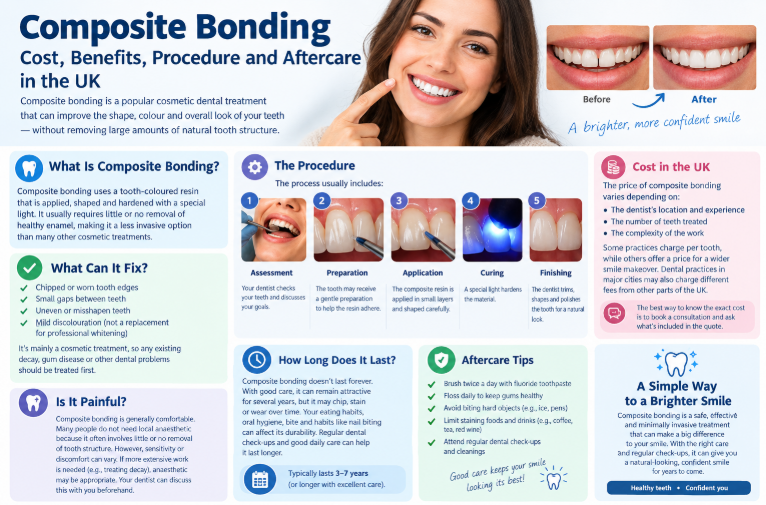
Composite bonding is a popular cosmetic dental treatment for improving the appearance of teeth. It can change the shape, colour, and overall look of your smile without removing large amounts of natural tooth structure.
The treatment uses a tooth-coloured resin called composite. A dentist applies it to the tooth, shapes it, and hardens it with a special light.
For many people, composite bonding offers a simple way to address small chips, gaps, uneven edges, and minor cosmetic concerns. However, it is not suitable for every dental problem.
What Is Composite Bonding?
Composite bonding is a cosmetic dental procedure that uses tooth-coloured resin to improve the appearance of a tooth. The dentist carefully applies the material to the tooth surface and shapes it to create the desired result.
Once the resin looks right, the dentist hardens it with a curing light. The bonded material then receives a final polish.
Unlike some cosmetic treatments, composite bonding teeth usually require little or no removal of healthy enamel. This makes the procedure less invasive than treatments that require significant tooth preparation.
The final result depends on the dentist’s skill, the condition of your teeth, and the type of change you want to make.
What Can Composite Bonding Fix?
Composite bonding can address several minor cosmetic concerns. Dentists may use it to improve chipped or worn tooth edges.
It can also close small gaps between teeth and make uneven teeth appear more balanced. In some cases, the material can improve the appearance of slightly misshapen teeth.
Bonding may also help improve the appearance of mild tooth discolouration. However, it does not work like professional teeth whitening. Your dentist can explain which option suits your particular staining.
The treatment is mainly cosmetic. Existing tooth decay, gum disease, or other dental problems may need attention before bonding.
How Does Composite Bonding Work?
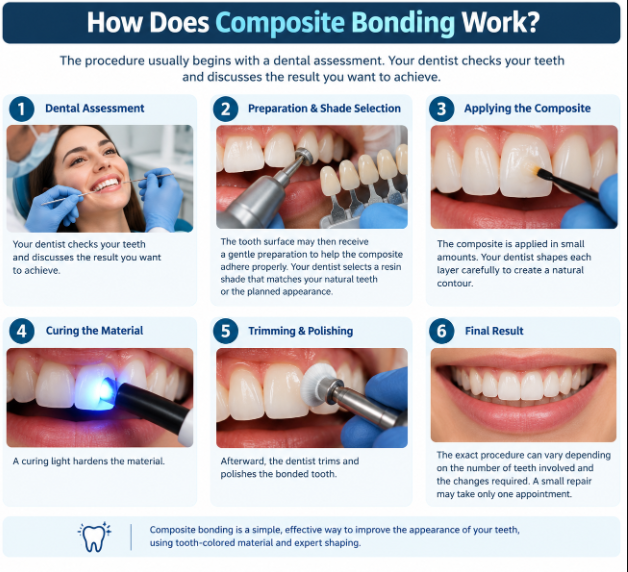
The procedure usually begins with a dental assessment. Your dentist checks your teeth and discusses the result you want to achieve.
The tooth surface may then receive a gentle preparation to help the composite adhere properly. Your dentist selects a resin shade that matches your natural teeth or the planned appearance.
The composite is applied in small amounts. Your dentist shapes each layer carefully to create a natural contour.
A curing light hardens the material. Afterward, the dentist trims and polishes the bonded tooth.
The exact procedure can vary depending on the number of teeth involved and the changes required. A small repair may take only one appointment.
Is Composite Bonding Painful?
Composite bonding is generally considered a comfortable treatment. Because the procedure often involves little or no removal of tooth structure, many people do not need local anaesthetic.
However, sensitivity or discomfort can vary between patients. If the dentist needs to treat decay or prepare the tooth more extensively, anaesthetic may sometimes be appropriate.
Your dentist can discuss this with you before treatment. Tell them if you have sensitive teeth or feel anxious about dental procedures.
Composite Bonding Cost in the UK
The price of composite bonding varies across the UK. Several factors can affect the final cost, including the dentist’s location, experience, the number of teeth treated, and the complexity of the work.
Some practices charge per tooth, while others provide a price for a wider smile makeover. Therefore, two patients can receive different quotes for apparently similar treatment.
A consultation is the best way to understand your expected cost. Ask what the quoted price includes and whether follow-up appointments or future repairs carry additional charges.
Dental practices in major cities may also charge different fees from practices in other parts of the UK.
How Long Does Composite Bonding Last?
Composite bonding does not last forever. With good care, it can remain attractive for several years, although the exact lifespan varies.
The material can chip, stain, or wear over time. Your eating habits, oral hygiene, bite, and habits such as nail biting can affect its durability.
Regular dental appointments can help your dentist monitor the bonded areas. Good daily care can also reduce unnecessary wear.
If bonding becomes damaged, a dentist may be able to repair or replace the affected section.
Advantages of Composite Bonding
One major advantage is that treatment can often be completed quickly. Minor cosmetic changes may require only one appointment.
The procedure can also preserve much of the natural tooth structure. Composite resin can be shaped directly on the tooth, allowing the dentist to make precise adjustments.
Another benefit is that repairs are often possible if the material chips. The treatment can therefore provide a flexible option for people seeking minor cosmetic improvements.
However, results vary. A consultation remains important before deciding whether bonding is suitable.
Possible Disadvantages and Risks
Composite resin is not as strong as natural tooth enamel. It can therefore chip or wear, particularly when exposed to heavy biting forces.
The material can also become stained over time. Smoking, strongly coloured foods, and drinks such as coffee and tea may contribute to staining.
Bonding may not be suitable for people with significant tooth damage or untreated dental disease. It may also provide limited results when someone wants a major change in tooth colour or position.
Your dentist should explain the expected result and any limitations before treatment.
How to Care for Composite Bonding Teeth
Good oral hygiene is important after treatment. Brush your teeth regularly with fluoride toothpaste and clean between your teeth as recommended by your dental professional.
Avoid using your bonded teeth to bite hard objects. Habits such as chewing pens or biting fingernails can increase the risk of damage.
If you notice a sharp edge, chip, or sudden change in the bonded material, contact your dentist. Do not try to repair the area yourself.
Regular dental check-ups can also help maintain both your natural teeth and bonded areas.
Composite Bonding vs Other Cosmetic Treatments
Composite bonding is only one option for changing the appearance of teeth. Depending on your needs, a dentist may discuss whitening, veneers, orthodontic treatment, or other procedures.
Whitening mainly changes tooth colour. Orthodontic treatment focuses on moving teeth into different positions.
Bonding can alter the shape and appearance of individual teeth without major tooth preparation. Veneers can provide a different cosmetic result but generally involve a different treatment process.
The appropriate option depends on your dental health, goals, budget, and how much change you want.
Is Composite Bonding Right for You?
Composite bonding may suit people who want subtle cosmetic improvements without extensive dental treatment. It can be useful for small chips, minor gaps, uneven edges, and changes in tooth shape.
Still, cosmetic treatment should begin with a proper dental assessment. Your dentist needs to check the condition of your teeth and gums before recommending treatment.
A good consultation should also cover expected results, maintenance, longevity, and potential limitations. This helps you make an informed decision about your smile.
Conclusion
Composite bonding can provide a practical way to improve the appearance of teeth with relatively little tooth preparation. The treatment uses tooth-coloured composite resin to reshape or repair selected areas.
Results can look natural when the material is carefully matched, shaped, and polished. However, the treatment can chip or stain, and it requires sensible oral care.
If you are considering composite bonding teeth, speak with a qualified dentist. They can assess your teeth and explain whether bonding is appropriate for your needs.
FAQs
How much does composite bonding cost in the UK?
The cost varies between dental practices and depends on factors such as the number of teeth treated and the complexity of the work. A dentist can provide a personalised quote after an examination.
Does composite bonding damage your teeth?
Composite bonding usually requires little or no removal of healthy tooth structure. However, the preparation and treatment approach can vary, so your dentist should explain what will happen to your teeth.
How long does composite bonding take?
Small bonding treatments can often be completed during one appointment. The total time depends on how many teeth require treatment and how much reshaping is needed.
Can composite bonding fix gaps?
Composite bonding can close some small gaps between teeth by adding carefully shaped composite resin. Larger gaps may require orthodontic or other dental treatment.
Can you whiten composite bonding?
Traditional teeth whitening does not whiten existing composite resin in the same way it affects natural teeth. If you are considering whitening, discuss it with your dentist before having bonding.
Can composite bonding stain?
Yes. Composite resin can become stained over time. Coffee, tea, smoking, and other staining substances may contribute to changes in colour.
For more updates visit: HEALTH BLOOM











Discussion about this post