












The benefits of exercise go far beyond improving physical fitness. Regular physical activity can support your heart, muscles, bones, brain and emotional wellbeing while helping you feel more energetic throughout the day. You do not need to become an athlete or spend hours in a gym to experience these benefits. Simple activities such as walking, cycling, swimming, dancing or playing a sport can contribute to a healthier lifestyle.
Exercise is also one of the most practical ways to support overall health as part of a balanced routine. When physical activity becomes a regular habit, it can improve how your body functions and help you manage everyday activities more comfortably. Understanding these benefits can make it easier to find an approach to exercise that fits your lifestyle.
What Are the Benefits of Exercise?
Exercise is any physical activity that makes your body move and uses your muscles. It can range from gentle movement to more demanding activities. The type, frequency and intensity of exercise can affect the benefits you receive, but regular movement is valuable at almost every age.
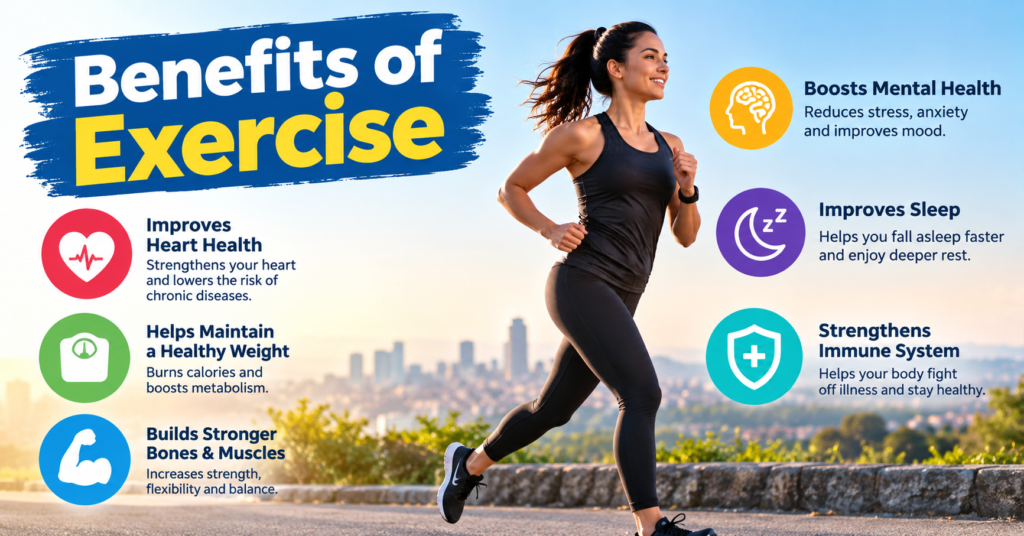
One of the biggest advantages of exercise is that it supports several areas of health at the same time. Physical activity can strengthen the cardiovascular system, help maintain muscle and bone strength, support a healthy weight and contribute to better mental wellbeing.
The key is consistency rather than perfection. A realistic exercise routine that you can maintain is generally more useful than an intense routine that you quickly abandon.
Exercise Supports Heart Health
One of the most important benefits of exercise is its positive effect on cardiovascular health. Activities that raise your heart rate, such as brisk walking, cycling or swimming, train your heart and circulation to work efficiently.
Regular physical activity can also support healthy blood pressure and cholesterol levels when combined with a balanced lifestyle. Over time, staying active can contribute to a healthier cardiovascular system and reduce several risk factors associated with heart disease.
You can begin with manageable activities and gradually increase your movement as your fitness improves. Even adding more walking to your normal day can be a useful step towards becoming more active.
Exercise Builds Stronger Muscles and Bones
Your muscles respond to regular use. Strength-based activities can help maintain and develop muscle strength, while weight-bearing activities can support bone health.
Strength exercises can include bodyweight movements, resistance bands or supervised weight training. You do not necessarily need complicated equipment to build a useful exercise routine.
Maintaining muscle strength is particularly valuable because strong muscles support everyday movements such as climbing stairs, carrying shopping and maintaining balance. Regular movement can also help you stay physically capable as you get older.
Exercise Can Improve Mental Wellbeing
Physical activity is closely connected with mental wellbeing. Exercise can provide a break from daily responsibilities and create time to focus on your body and surroundings.
Regular movement may help improve mood and reduce feelings of everyday stress. Activities such as walking outdoors, cycling, swimming or participating in a team sport can also provide opportunities for social interaction and enjoyment.
Exercise should not be viewed as a replacement for professional support when someone is experiencing significant mental health difficulties. However, regular physical activity can be a valuable part of a broader approach to wellbeing.
Exercise May Help You Sleep Better
Another useful benefit of exercise is its connection with sleep. Being physically active during the day can help support a healthy sleep routine and make it easier for some people to settle at night.
Exercise can also help establish a consistent daily schedule. For example, taking a walk during the day or completing a suitable workout can add structure to your routine.
However, everyone responds differently to exercise timing. Some people may find intense activity close to bedtime makes it harder to relax, so choosing a comfortable time of day can be helpful.
Exercise Can Increase Everyday Energy
It may seem surprising that physical activity can help you feel more energetic, but regular movement can support your overall stamina and fitness.
When your body becomes more accustomed to physical activity, everyday tasks may feel easier. Walking longer distances, using stairs or carrying everyday items can become more comfortable as your fitness develops.
Rather than relying entirely on short-term boosts in energy, regular exercise can become part of a routine that supports your physical capacity throughout the day.
Exercise Helps Support a Healthy Weight
Exercise uses energy and can play an important role in maintaining a healthy weight when combined with nutritious food and other healthy habits.
However, exercise should not be treated simply as a way to change body size. Physical activity provides many benefits that have nothing to do with weight. Improving strength, cardiovascular fitness, mobility, balance and mood are all valuable outcomes.
A sustainable routine is usually easier to maintain than an extreme approach. Choosing activities you enjoy can make regular movement feel more natural and less like a chore.
Exercise Supports Brain Health
Physical activity can also benefit the brain. Regular movement increases blood flow throughout the body and can support aspects of cognitive health.
Activities that require coordination, balance or learning new movements can also challenge the brain in different ways. Dancing, certain sports and activities that involve changing direction or learning skills combine physical and mental engagement.
Staying active throughout life may therefore contribute to overall brain and cognitive wellbeing alongside other healthy lifestyle habits.
Exercise Can Improve Flexibility, Balance and Mobility
Not every exercise session needs to be focused on cardiovascular fitness or strength. Mobility, flexibility and balance are also important parts of physical health.
Stretching and mobility exercises can help you move more comfortably, while balance-focused activities can support physical stability. Gentle activities such as yoga or controlled movement exercises may be useful for people who want to include these elements in their routine.
Better mobility can make everyday activities more comfortable and help you remain physically independent as you age.
Exercise Can Strengthen Your Daily Routine
Another often-overlooked benefit of exercise is the structure it can add to everyday life. Setting aside time for movement encourages you to create healthier routines around sleep, meals, work and relaxation.
Exercise can also provide a clear mental break from screens and work. Even a short walk can give you an opportunity to step away from your usual environment and return with a fresh perspective.
The best routine is one that fits realistically into your schedule. You might exercise in the morning, take a walk during lunch or choose an activity after school or work.
How Much Exercise Should You Do?
The ideal amount of exercise depends on factors such as age, fitness level, health and personal circumstances. For many people, combining aerobic activity with muscle-strengthening activities provides a balanced approach.
If you have not exercised regularly, starting gradually is sensible. Begin with activities that feel manageable and increase duration or intensity over time rather than trying to do too much immediately.
It is also important to listen to your body. Persistent pain, dizziness, unusual breathlessness or other concerning symptoms should not be ignored, and professional medical advice may be appropriate.
How to Make Exercise a Regular Habit
Making exercise enjoyable can make consistency much easier. Instead of choosing an activity simply because it is popular, consider what you genuinely like doing.
Walking with friends, cycling, swimming, dancing, recreational sports and home workouts can all provide opportunities to stay active. Variety can also prevent your routine from becoming repetitive.
Small changes matter too. Taking the stairs when practical, walking for short journeys and spending less time sitting can increase your overall daily movement.
Conclusion
The benefits of exercise extend across many areas of physical and mental wellbeing. Regular activity can support heart health, strengthen muscles and bones, improve mobility, contribute to better sleep and help maintain energy and fitness.
Exercise can also support mood, brain health and a balanced lifestyle. Most importantly, you do not need a perfect workout routine to become more active. Choosing realistic activities and doing them consistently can make a meaningful difference.
Whether you prefer walking, cycling, swimming, strength training, dancing or sport, the best exercise is often the activity you can enjoy and continue doing. Start at a comfortable level, build gradually and make regular movement a natural part of your life.
FAQs
What are the main benefits of exercise?
The main benefits of exercise include better cardiovascular fitness, stronger muscles and bones, improved mobility, better sleep, increased stamina and support for mental wellbeing. Regular physical activity can also contribute to a healthier overall lifestyle.
Can exercise improve mental health?
Exercise can support mental wellbeing by helping manage everyday stress and supporting a more positive mood. Physical activity can be especially useful as part of a broader healthy routine, although it should not replace professional support when someone needs it.
Can exercise help you sleep better?
Regular exercise may support better sleep for some people. Creating a consistent routine and staying physically active during the day can contribute to healthier sleep habits. The ideal exercise timing can vary between individuals.
Is walking considered exercise?
Yes, walking is a form of physical activity and can contribute to your overall fitness. Brisk walking can increase your heart rate and provide cardiovascular benefits, while regular walking also adds useful movement to your daily routine.
How does exercise help the heart?
Exercise makes the heart work harder to circulate blood around the body. Regular physical activity can improve cardiovascular fitness and support several factors associated with heart health, particularly when combined with other healthy habits.
Can exercise make you more energetic?
Regular physical activity can improve stamina and make everyday physical tasks feel easier. Although exercise can temporarily make you tired, developing better fitness can help support your energy and physical capacity over time.
For more updates visit: HEALTH BLOOM










Discussion about this post