














Magnesium is an essential mineral that your body needs every day. It helps your muscles and nerves work properly. It also supports energy production, bone health, and many other body functions.
You can get magnesium from foods such as nuts, whole grains, spinach, and green vegetables. However, some people choose supplements to increase their daily intake.
Two common options are magnesium glycinate and magnesium citrate. Because of this, magnesium glycinate vs citrate is a popular question.
Both forms provide magnesium. However, they can affect digestion in different ways. Your choice may depend on your needs, diet, and how your body reacts.
What Is Magnesium Glycinate?
Magnesium glycinate is magnesium linked to glycine. Glycine is an amino acid that occurs naturally in the body.
This form is popular because many people find it gentle on the stomach. It also tends to have less of a laxative effect than some other magnesium forms.
Many people use magnesium glycinate as part of their daily supplement routine. It is also common in products aimed at relaxation and sleep support.
Still, it helps to separate facts from marketing claims. Magnesium has clear roles in normal muscle and nerve function. It also helps the body release energy from food.
When choosing a product, check the elemental magnesium amount. This number shows how much actual magnesium the supplement provides.
What Is Magnesium Citrate?

Magnesium citrate combines magnesium with citric acid. It is another common form found in supplements.
This form can provide magnesium effectively. It can also affect the bowel because it may pull water into the intestines.
As a result, some people use magnesium citrate when they also want a bowel-loosening effect. However, this effect may not suit everyone.
Taking too much can lead to loose stools or diarrhoea. People with sensitive digestion may notice these effects more easily.
Magnesium Glycinate vs Citrate: What Is the Difference?
The main difference comes from the compound linked to magnesium.
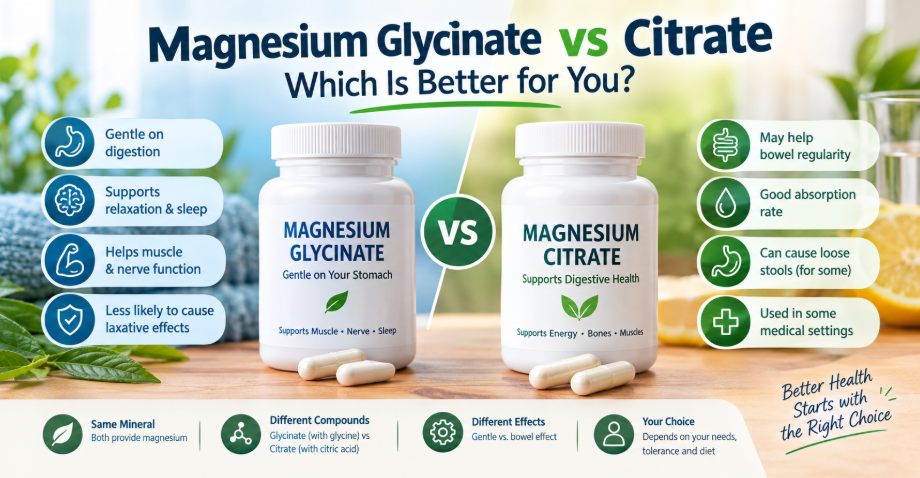
Magnesium glycinate contains glycine. In contrast, magnesium citrate contains citric acid. Both forms can increase your magnesium intake.
Their effects on digestion can vary. Magnesium citrate often has a stronger effect on the bowel. Glycinate usually has a milder effect.
Absorption also matters when comparing these two forms. The body can absorb several types of magnesium well. However, absorption can vary based on the form and dose.
Therefore, there is no single choice that works best for everyone. Your reason for taking magnesium should also guide your decision.
Magnesium Glycinate Benefits
Magnesium glycinate benefits mainly come from the magnesium it provides. Magnesium supports normal muscle and nerve function. It also contributes to normal energy metabolism.
For people with sensitive digestion, glycinate may offer another advantage. Its effect on the bowel tends to be milder than magnesium citrate.
Furthermore, many evening supplements contain magnesium glycinate. These products often promote it for relaxation or sleep.
However, results can vary from person to person. Research on specific health benefits does not always give the same results. A supplement should also support, not replace, a healthy diet.
Magnesium Citrate Benefits
Magnesium citrate can help increase your magnesium intake. At the same time, it may have an effect on bowel movements.
This effect can help some people who want softer stools. On the other hand, it may cause problems for people with sensitive digestion.
For example, a high amount may cause diarrhoea or stomach cramps. Therefore, the dose can make a big difference.
Magnesium citrate may suit someone who wants magnesium and can tolerate its effect on digestion.
Which Is Better for Absorption?
There is no simple winner when you compare magnesium glycinate vs citrate.
Several factors can affect magnesium absorption. These include the form, dose, diet, and individual digestive health.
Magnesium citrate has good absorption compared with some less soluble forms. Magnesium glycinate can also provide a useful source of magnesium.
For most people, absorption is only one part of the decision. The amount of elemental magnesium matters too.
Your body may also respond differently from someone else’s. Therefore, comfort and tolerance are important factors.
Which Form Is Gentler on the Stomach?
Magnesium glycinate may suit people who want to avoid a strong laxative effect.
By comparison, magnesium citrate can increase water in the bowel. This can make stools softer and easier to pass.
However, taking too much may lead to diarrhoea. Some people may also experience stomach cramps or discomfort.
If you often have digestive problems, consider your tolerance before choosing a supplement. A pharmacist can also help you choose a suitable option.
How Much Magnesium Do You Need?
Your daily magnesium needs depend on factors such as age and sex.
For adults aged 19 to 64 in the UK, the NHS recommends 300mg per day for men. Women in the same age group need 270mg per day.
Fortunately, many foods contain magnesium. Nuts, wholemeal bread, spinach, and whole grains are useful sources.
Therefore, you may not need a supplement if your diet already provides enough magnesium. Always check the elemental magnesium amount before taking a supplement.
Can Magnesium Supplements Cause Side Effects?
Magnesium supplements can cause digestive side effects. These may include diarrhoea, nausea, and stomach cramps.
The risk often increases when you take larger amounts. Magnesium citrate may cause these effects more often because of its action on the bowel.
Most people can tolerate suitable amounts. However, people with kidney problems need extra care.
Your kidneys help remove excess magnesium from your body. Kidney problems can therefore increase the risk of magnesium building up in the blood.
If you take regular medicines, speak with a pharmacist before using magnesium supplements. This step can help you avoid possible medicine interactions.
Magnesium Glycinate vs Citrate: Which One Should You Choose?
Your main reason for taking magnesium should guide your choice.
Magnesium glycinate may suit someone who wants a gentler option. It can be useful if you want to reduce the chance of a strong bowel effect.
Magnesium citrate may suit someone who also wants a laxative effect. However, it may cause loose stools in some people.
Neither form suits every person. Your diet, health, dose, and personal tolerance all play a role.
If you have a confirmed magnesium deficiency, speak with a healthcare professional. They can help you choose the right product and dose.
Conclusion
Magnesium glycinate vs citrate is not simply about which form is better.
Both options can increase your magnesium intake. Magnesium supports normal muscle and nerve function. It also plays a role in energy production and other body processes.
Magnesium glycinate may suit people who want a gentler digestive effect. Meanwhile, magnesium citrate may suit those who also want a bowel-loosening effect.
Before choosing a product, check its elemental magnesium content. Also, consider your diet and your response to supplements.
If you have kidney problems or take regular medicines, seek professional advice first. This can help you choose a safe and suitable option.
FAQs
Is magnesium glycinate better than magnesium citrate?
Neither form is best for everyone. Magnesium glycinate may suit people who want a gentler digestive effect. Magnesium citrate may suit those who can tolerate its bowel effect.
Can I take magnesium glycinate and citrate together?
Taking both forms can increase your total magnesium intake. For that reason, check the elemental magnesium in each product. If you are unsure, ask a pharmacist for advice.
Which is better for sleep, magnesium glycinate or citrate?
Magnesium glycinate is common in supplements designed for evening use. However, that does not mean it will improve sleep for everyone. Magnesium supports normal nerve and muscle function, while specific sleep benefits can vary.
Does magnesium citrate make you poop?
Yes, it can. Magnesium citrate may pull water into the bowel. As a result, stools can become softer. Larger amounts may cause diarrhoea or stomach cramps.
Is magnesium glycinate easy on the stomach?
Many people find magnesium glycinate gentle on the stomach. It often has less of a laxative effect than magnesium citrate. However, your response can still vary.
What are the main magnesium glycinate benefits?
Magnesium glycinate provides magnesium to the body. Magnesium supports normal muscle and nerve function. It also contributes to normal energy production and other body processes.
For more updates visit: HEALTH BLOOM











Discussion about this post