









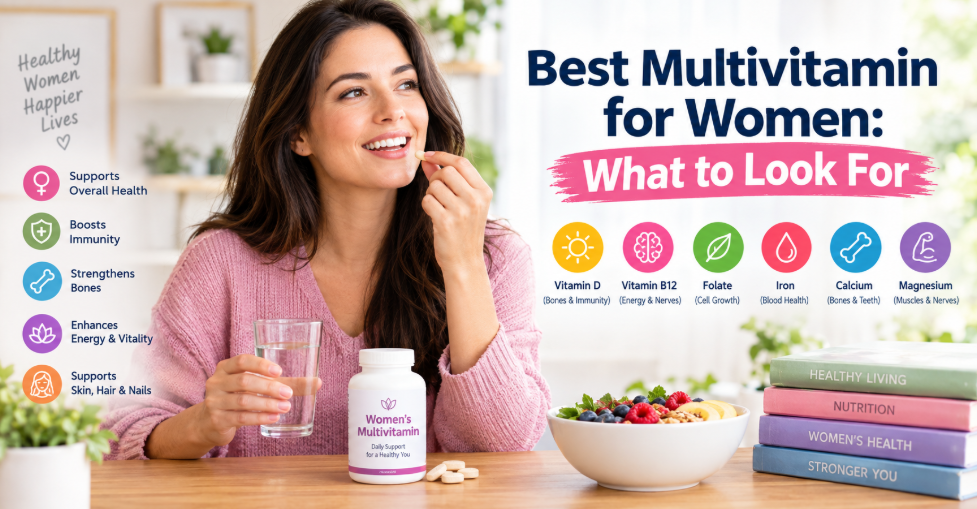
Finding the best multivitamin for women can feel confusing. Shelves are filled with products aimed at different ages, diets, and lifestyles.
However, more vitamins do not always mean better results. The right choice depends on your diet, age, health needs, and the nutrients you may lack.
Women can have different nutritional needs throughout life. Pregnancy, menstruation, menopause, and ageing can all affect nutrient requirements.
A good multivitamin should complement a balanced diet rather than replace healthy food. It should also provide sensible amounts of essential vitamins and minerals.
What Is a Multivitamin for Women?
A multivitamin is a supplement that contains several vitamins and minerals in one product. Most formulas are designed for daily use.
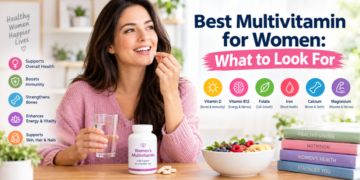
Products for women may contain nutrients such as vitamin D, vitamin B12, folate, iron, calcium, magnesium, and zinc. However, the amounts can vary greatly between brands.
Some formulas also contain ingredients marketed for energy, immunity, skin, hair, or bone health. These additions are not always necessary for everyone.
The best multivitamin for women should therefore match your individual needs. A simple formula may be more suitable than one with a very large number of ingredients.
What Should You Look For in the Best Multivitamin for Women?
Vitamin D
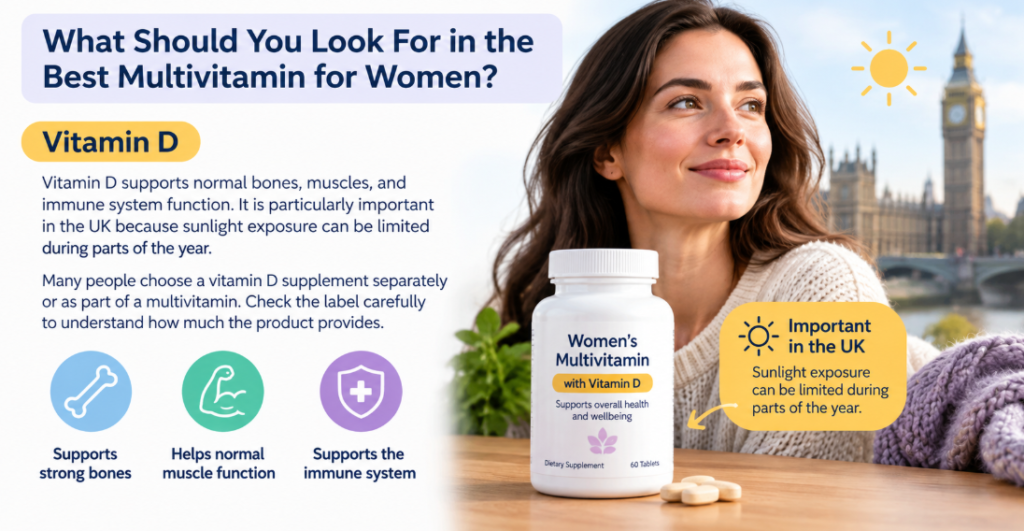
Vitamin D supports normal bones, muscles, and immune system function. It is particularly important in the UK because sunlight exposure can be limited during parts of the year.
Many people choose a vitamin D supplement separately or as part of a multivitamin. Check the label carefully to understand how much the product provides.
Vitamin B12
Vitamin B12 helps support normal red blood cell formation and the nervous system. It is found naturally in foods such as meat, fish, eggs, and dairy products.
People following a vegan diet may need particular attention to their B12 intake. A suitable supplement can help meet nutritional needs when dietary sources are limited.
Folate
Folate plays an important role in cell division and normal blood formation. It is also especially important before and during pregnancy.
Women who may become pregnant should consider folic acid guidance separately. A standard multivitamin may not provide the amount needed for pregnancy planning.
Iron
Iron helps the body make haemoglobin, which carries oxygen around the body. Women who have menstrual periods can have higher iron needs than men.
However, taking high-dose iron without a reason is not always appropriate. Too much iron can cause side effects and may be harmful in some situations.
If you think you may have low iron levels, speak with a healthcare professional before choosing a high-iron supplement.
Calcium and Magnesium
Calcium supports normal bones and teeth. Magnesium contributes to normal muscle and nervous system function.
Women should consider their overall diet before relying on a multivitamin for these nutrients. Many multivitamins contain only modest amounts of calcium and magnesium.
Best Multivitamin for Women Over 50
Nutritional needs can change as women get older. For this reason, the best multivitamin for women over 50 may differ from a product designed for younger adults.
Vitamin D becomes particularly important for maintaining normal bones and muscles. Vitamin B12 may also deserve more attention as absorption can become less efficient with age.
Calcium intake is another consideration. Women approaching or going through menopause may pay closer attention to bone health.
Iron is different. After menopause, many women no longer need as much iron from supplements. A high-iron formula may therefore not be the right choice unless a healthcare professional recommends it.
A product designed for women over 50 can be useful, but the label still matters. Age-specific marketing does not automatically make a supplement better.
Should Women Take a Multivitamin Every Day?
Not every woman needs a multivitamin. A varied diet can provide many of the vitamins and minerals the body needs.
However, supplements can be useful when diet alone does not provide enough of a particular nutrient. Dietary restrictions, low food intake, or certain life stages can affect nutritional needs.
Some women may also need individual supplements rather than a broad multivitamin. For example, pregnancy requires specific nutritional considerations.
Before taking a supplement long term, check the ingredients and doses. This is especially important if you already take other vitamins or medicines.
How to Choose a Multivitamin
Start by looking at the nutrition label. Check which vitamins and minerals it contains and how much each serving provides.
Avoid assuming that the product with the highest percentages is automatically the best. Very high doses are not necessary for everyone.
Consider your age and diet as well. Someone following a vegan diet may have different needs from someone who regularly eats animal products.
You should also consider whether you take separate supplements. Combining several products can increase your total intake of certain nutrients.
Choose a product from a reputable manufacturer and follow the recommended serving size. Taking more than the label suggests does not guarantee better results.
Are Women’s Multivitamins Safe?
Multivitamins are generally designed to be used within recommended amounts. However, supplements can still cause problems when taken incorrectly.
Certain nutrients can build up in the body or interact with medicines. Iron, vitamin A, vitamin D, and other nutrients require particular care at higher doses.
Pregnant women should also take extra care when choosing supplements. Some forms or doses of nutrients may not be suitable during pregnancy.
If you have a medical condition, take regular medication, or plan to use several supplements together, speak with a pharmacist or healthcare professional.
Common Mistakes When Choosing a Multivitamin
One common mistake is choosing a supplement based only on the number of ingredients. A longer ingredient list does not necessarily make a product more effective.
Another mistake is ignoring your diet. Your food intake should guide your supplement choices whenever possible.
Some people also take several products without checking their combined ingredients. This can lead to unnecessarily high intake of certain vitamins and minerals.
Finally, avoid treating a multivitamin as a replacement for healthy food. Whole foods provide protein, fibre, healthy fats, and many other useful compounds.
Best Multivitamin for Women: What Matters Most?
The best multivitamin for women is not necessarily the most expensive product. It is the one that fits your nutritional needs without providing unnecessary amounts.
Look for a sensible range of essential nutrients. Consider vitamin D, B12, folate, iron, calcium, and magnesium based on your age and diet.
Women over 50 may need to pay closer attention to bone health and vitamin B12. At the same time, they should avoid assuming that high-dose iron is necessary.
A multivitamin can fill nutritional gaps, but it works best alongside a balanced diet and healthy lifestyle.
Conclusion
Choosing the best multivitamin for women starts with understanding your own nutritional needs. Age, diet, lifestyle, and life stage can all affect which nutrients matter most.
Women over 50 may have different priorities from younger women. Vitamin D, B12, calcium, and other nutrients can become more important, while iron needs may change.
Always read the label and check the dose of each nutrient. If you have a health condition or take medication, professional advice can help you choose safely.
The goal is not to take the strongest supplement available. Instead, choose a suitable product that complements your diet and supports your nutritional needs.
FAQs
What is the best multivitamin for women?
The best multivitamin depends on your age, diet, and nutritional needs. Look for a balanced formula with appropriate amounts of essential vitamins and minerals.
What is the best multivitamin for women over 50?
The best multivitamin for women over 50 should reflect changing nutritional needs. Vitamin D, vitamin B12, and nutrients linked with bone health may deserve attention.
Do women need a multivitamin every day?
Not every woman needs a daily multivitamin. A balanced diet can provide many essential nutrients, while supplements may help fill specific nutritional gaps.
Should women’s multivitamins contain iron?
Some women’s multivitamins contain iron because menstruating women can have greater iron needs. However, iron is not suitable at high doses for everyone.
Is vitamin D important for women?
Vitamin D supports normal bones, muscles, and immune function. Women in the UK may need to pay attention to vitamin D intake, particularly during periods of limited sunlight.
Is a multivitamin enough for women over 50?
A multivitamin may help provide several nutrients, but it does not replace a balanced diet. Some people may need additional nutrients based on their diet or individual circumstances.
For more updates visit: HEALTH BLOOM











Discussion about this post