












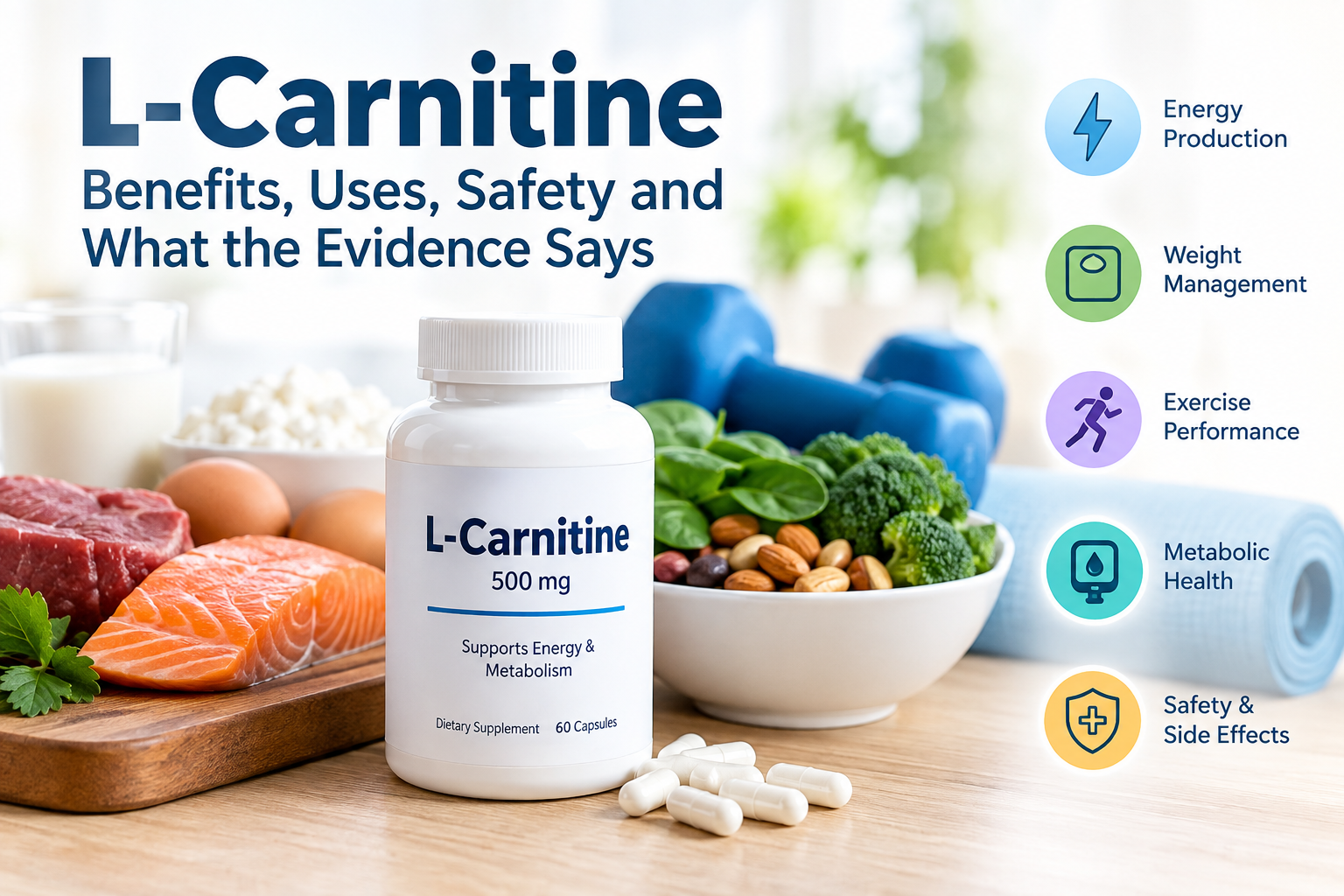
L-carnitine is a naturally occurring compound that helps the body produce energy. Your body makes it from certain amino acids, and you also get it from foods such as meat, fish and dairy products.
L-carnitine supplements are often marketed for weight loss, exercise performance and energy. However, research does not support every claim made about these products.
Understanding how L-carnitine works can help you decide whether supplementation is relevant to your needs.
What Is L-Carnitine?
L-carnitine helps transport fatty acids into mitochondria. Mitochondria are structures inside cells that produce energy. This process allows the body to use certain fats for energy production.
Healthy adults usually make enough carnitine on their own. Therefore, most people do not need to obtain a specific amount through supplements.
Carnitine also occurs naturally in many foods. Red meat contains particularly high amounts, while poultry, fish and dairy provide smaller amounts. Plant foods generally contain much less carnitine.
L-Carnitine Benefits
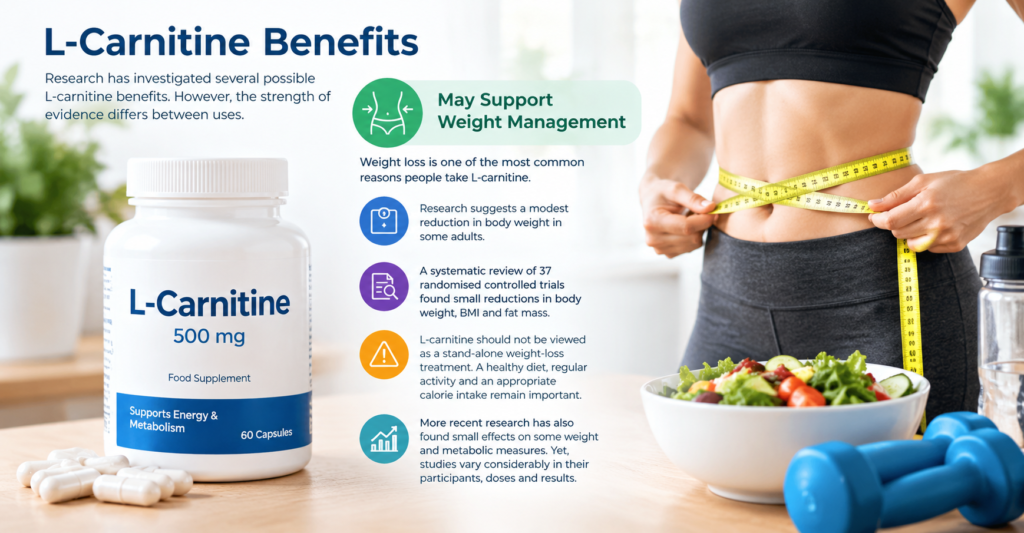
Research has investigated several possible l carnitine benefits. However, the strength of evidence differs between uses.
May Support Weight Management
Weight loss is one of the most common reasons people take L-carnitine.
Research suggests that supplementation may produce a modest reduction in body weight in some adults. A systematic review of 37 randomised controlled trials found small reductions in body weight, BMI and fat mass.
However, L-carnitine should not be viewed as a stand-alone weight-loss treatment. A healthy diet, regular activity and an appropriate calorie intake remain important.
More recent research has also found small effects on some weight and metabolic measures. Yet, studies vary considerably in their participants, doses and results.
May Have a Role in Exercise
L-carnitine plays a natural role in energy metabolism. This has led to interest in its use by athletes and active people.
Research on exercise performance remains mixed. Some studies have reported benefits for certain high-intensity exercise measures, while other research has found little or no improvement in moderate exercise performance.
Therefore, taking L-carnitine does not guarantee better workouts or greater endurance.
May Affect Some Metabolic Markers
Researchers have also examined L-carnitine in people with diabetes and impaired glucose control.
A 2024 meta-analysis of randomised trials in people with type 2 diabetes found small reductions in several cardiometabolic measures. However, the researchers noted substantial variation between studies, so the findings require cautious interpretation.
This does not mean L-carnitine can replace diabetes treatment. Anyone managing blood glucose should discuss supplements with a healthcare professional.
Acetyl L-Carnitine vs L-Carnitine
Acetyl L-carnitine is a form of carnitine found in dietary supplements. It has an acetyl group attached to the carnitine molecule.
Both forms are related, but they are not identical supplements. Acetyl L-carnitine has received particular research interest in areas involving the nervous system and cognitive function.
Evidence for these uses remains mixed. Research has not established that acetyl L-carnitine provides broad benefits for healthy people.
The appropriate form depends on the reason for supplementation. A healthcare professional can help determine whether either form is suitable.
How Does L-Carnitine Work?
L-carnitine helps transport long-chain fatty acids into mitochondria. These fatty acids can then undergo processes that help produce energy.
This role explains why L-carnitine is often associated with fat metabolism. However, its involvement in fat metabolism does not automatically mean taking more L-carnitine will cause substantial fat loss.
Healthy people generally maintain their own carnitine levels. Supplementation may therefore have different effects depending on a person’s health, diet and existing carnitine status.
L-Carnitine Food Sources
You can obtain carnitine naturally through your diet.
Animal foods tend to contain more carnitine than plant foods. Red meat is a particularly rich source. Fish, poultry and dairy products also contribute some carnitine.
Healthy bodies can also produce carnitine. For this reason, dietary deficiency is uncommon in healthy people.
Certain medical conditions can affect carnitine levels. These include some rare genetic disorders and advanced kidney disease. People receiving dialysis may also have low carnitine levels.
L-Carnitine Side Effects and Safety
L-carnitine is generally well tolerated at appropriate amounts. However, larger supplemental doses can cause side effects.
Taking around 3 grams or more per day may cause nausea, vomiting, stomach cramps, diarrhoea and a fish-like body odour. People with chronic kidney disease may experience muscle weakness with high amounts. High doses may also increase seizure risk in people with seizure disorders.
L-carnitine can also interact with some medicines. For example, certain antibiotics and anticonvulsant medicines can affect carnitine levels.
If you take prescription medicines or have a medical condition, speak with a doctor or pharmacist before using a supplement.
Who May Need L-Carnitine?
Most healthy people do not need L-carnitine supplements because the body can make enough carnitine.
Supplementation can be more relevant in specific medical situations where carnitine levels become low. These situations should be assessed by a qualified healthcare professional.
People with kidney disease, seizure disorders or certain metabolic conditions should take particular care. The same applies to anyone taking medicines that may affect carnitine levels.
Is L-Carnitine Good for Weight Loss?
L-carnitine may have a modest effect on body weight in some people, but it is not a quick fat-burning solution.
Clinical research has found relatively small average changes. Results also differ between studies and populations. Therefore, expectations should remain realistic.
For sustainable weight management, nutrition, physical activity, sleep and overall lifestyle usually matter far more than a single supplement.
ALSO READ: Better Health Simple Ways to Improve Your Health and Wellbeing
Conclusion
L-carnitine is a naturally occurring compound with an important role in energy metabolism. The body can produce it, and dietary sources provide additional amounts.
Research suggests several possible l carnitine benefits, particularly modest effects on weight and some metabolic measures. However, evidence for exercise and other uses remains mixed.
Acetyl L-carnitine is a related form with different areas of research. Neither form should be treated as a universal health or weight-loss solution.
If you are considering supplementation, especially with an existing health condition or medication, professional advice can help you choose an appropriate approach.
FAQs
What is L-carnitine used for?
L-carnitine is commonly used as a dietary supplement for energy metabolism, exercise and weight management. Research suggests that its effects can vary between people and uses.
Does L-carnitine help you lose weight?
L-carnitine may support a modest reduction in body weight for some adults. However, research does not suggest that it produces dramatic weight loss on its own.
What are the main L-carnitine benefits?
Potential benefits include modest effects on body weight and certain metabolic measures. Research into exercise performance and other health uses has produced mixed results.
What is acetyl L-carnitine?
Acetyl L-carnitine is a form of carnitine used in some dietary supplements. Researchers have studied it for several neurological and cognitive applications, although evidence remains mixed.
Is L-carnitine safe?
L-carnitine is generally considered safe when used appropriately. Higher supplemental amounts can cause digestive symptoms and a fish-like body odour.
Can L-carnitine cause side effects?
Yes. Larger supplemental amounts may cause nausea, vomiting, stomach cramps, diarrhoea and body odour. People with certain medical conditions may face additional risks.
For more updates visit: HEALTH BLOOM









Discussion about this post