








By six months, your baby’s iron stores start running low even if they were full of energy at birth. This is one of the biggest reasons pediatricians push for iron rich foods for babies right when solids begin. If you’ve ever stood in the kitchen wondering what to actually put on that first spoon, this guide is for you.
Iron deficiency in infants is more common than most parents realize, and it can quietly affect brain development, energy, and mood before you even notice symptoms. The good news: fixing it (or preventing it) usually comes down to a handful of everyday foods, served the right way.
Why Babies Need Iron So Badly
Babies are born with iron reserves from their mothers, but these typically last only until around 4 to 6 months of age. After that, breast milk alone doesn’t supply enough iron to keep up with a growing brain and body. Formula-fed babies get iron through fortified formula, but once solids start, food becomes the main source for everyone.
Iron is essential for:
- Making hemoglobin, the part of blood that carries oxygen
- Supporting healthy brain growth and cognitive development
- Maintaining normal energy levels and immune function
Without enough iron, babies can develop iron-deficiency anemia, which pediatric sources link to delayed development, poor appetite, and low energy. This is why many pediatric guidelines specifically recommend introducing iron rich foods for babies as one of the very first solid foods, not something added later.
When to Start Iron Rich Foods for Babies
Most pediatric associations recommend starting solids around 6 months, and iron-rich options should be part of the very first foods offered — not saved for “later.” Signs your baby may be ready include:
- Sitting up with minimal support
- Good head and neck control
- Showing interest in food (leaning forward, watching you eat)
- Loss of the tongue-thrust reflex (no longer pushing food out automatically)
If your baby was born premature, has a low birth weight, or was exclusively breastfed past 6 months, talk to your pediatrician sooner — some babies need iron supplementation or earlier food introduction based on individual risk factors.
Best Iron Rich Foods for Babies
Iron comes in two forms: heme iron (from animal sources, absorbed more easily) and non-heme iron (from plants, absorbed less efficiently but still valuable). A mix of both works best.
Animal-Based Sources (Heme Iron)
| Food | Serving Idea for Babies | Notes |
|---|---|---|
| Pureed or shredded beef | Slow-cooked and finely minced | One of the richest iron sources |
| Chicken or turkey liver | Small amounts, well cooked, pureed | Very high in iron; use sparingly |
| Pureed chicken or turkey | Cooked soft, blended with broth | Mild flavor, easy to combine |
| Egg yolk | Mashed, offered plain or mixed in | Good starter food, easy to digest |
| Salmon or other fatty fish | Flaked, deboned carefully | Also adds healthy fats |
Plant-Based Sources (Non-Heme Iron)
| Food | Serving Idea for Babies | Notes |
|---|---|---|
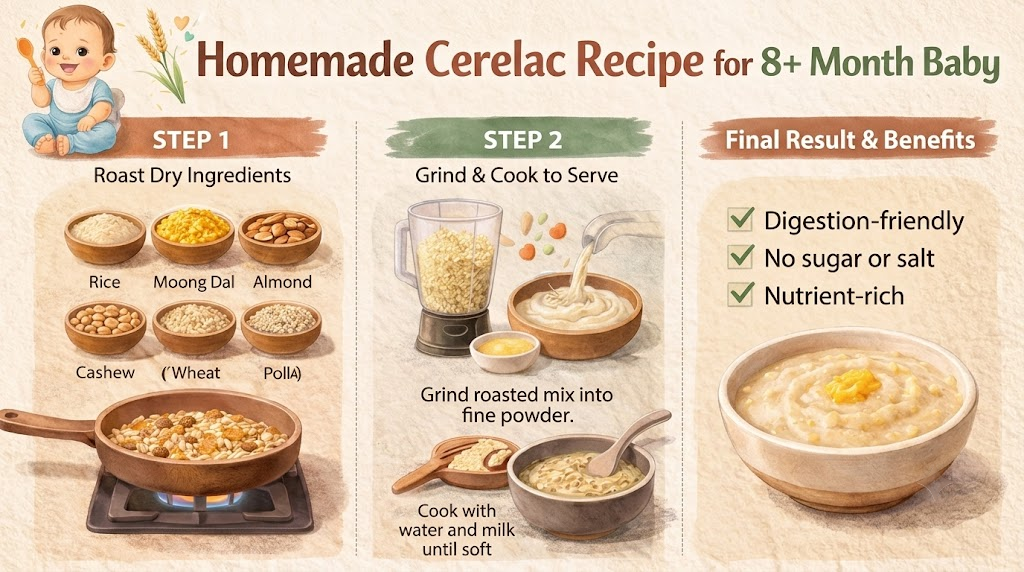
| Iron-fortified infant cereal | Mixed with breast milk or formula | Common first food in many countries |
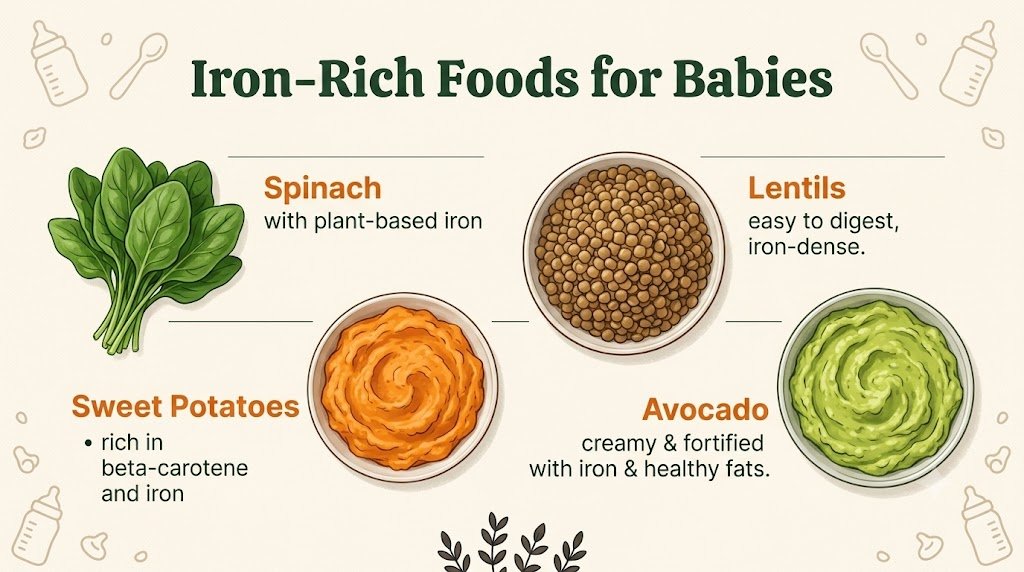
| Lentils and beans | Cooked very soft, mashed or pureed | Also high in fiber and protein |
| Tofu | Steamed and mashed or cut into strips | Soft texture, easy for babies |
| Spinach or other leafy greens | Finely chopped, cooked soft | Best paired with vitamin C foods |
| Quinoa | Cooked soft, slightly mashed | A whole grain with decent iron content |
A Simple Tip Most Parents Miss
Vitamin C helps the body absorb non-heme iron much better. Pairing plant-based iron foods with something like mashed strawberries, orange segments, steamed broccoli, or a few drops of citrus juice can meaningfully boost absorption. On the flip side, serving cow’s milk or tea-like drinks alongside iron-rich meals can reduce absorption, so it’s worth keeping those separate at mealtimes.
Sample One-Day Feeding Idea
This isn’t a rigid meal plan — just a realistic example of how iron-rich foods for babies can fit into a normal day:
- Breakfast: Iron-fortified oatmeal mixed with mashed banana
- Lunch: Soft-cooked lentils with a spoon of pureed spinach and a few orange segments
- Snack: Mashed egg yolk with avocado
- Dinner: Finely minced slow-cooked beef with mashed sweet potato
Portion sizes at this stage are small — often just a tablespoon or two per food to start. The goal is exposure and habit-building, not filling them up completely.
Also Read: Reign Residential Mental Health Treatment Center What to Know Before You Call
Common Mistakes Parents Make
- Relying only on infant cereal. It’s helpful, but shouldn’t be the only iron source long-term.
- Waiting too long to introduce meat. Many parents delay meat, assuming it’s “too advanced,” but pureed meat is actually one of the best early foods for iron.
- Skipping vitamin C pairings. This small step can significantly change how much iron your baby actually absorbs.
- Offering cow’s milk too early or too often. Whole cow’s milk isn’t recommended as a main drink before 12 months, partly because it can interfere with iron absorption and doesn’t offer the same iron content as breast milk or formula.
- Assuming a “picky” week means deficiency. One or two days of low intake is normal. Consistent refusal over weeks is worth mentioning to your pediatrician.
When to Talk to a Pediatrician
Every baby is different, and this article isn’t a substitute for medical advice. You should check in with your pediatrician if:
- Your baby was born premature or with low birth weight
- You notice unusual paleness, low energy, or poor weight gain
- Your baby has a very limited or restrictive diet
- You’re considering an iron supplement
Some pediatricians recommend a routine hemoglobin check around 9–12 months, especially for babies at higher risk of deficiency. This is a normal, simple blood test and nothing to be alarmed about.
Final Thoughts
Getting enough iron doesn’t require complicated meal plans or expensive specialty products. A thoughtful mix of soft-cooked meats, fortified cereals, legumes, and a few vitamin C pairings covers most babies’ needs. What matters most is consistency — offering iron rich foods for babies regularly, in textures they can manage, as part of everyday meals rather than a one-time effort.
If you’re ever unsure about your baby’s specific needs, your pediatrician remains the best resource, especially for babies with feeding difficulties, allergies, or medical history that changes the general advice.
FAQs
1. What is the best iron rich food for babies starting solids?
Iron-fortified infant cereal and well-cooked pureed meat (like beef or chicken) are two of the most commonly recommended first foods, since they’re easy to prepare in a smooth texture and provide meaningful iron content.
2. Can babies get enough iron from breast milk alone?
Breast milk contains some iron, but the amount typically isn’t enough to meet a baby’s needs past about 6 months. This is why solid iron-rich foods (or supplements, if advised by a doctor) become important around that age.
3. Is spinach a good iron source for babies?
Yes, but its iron isn’t absorbed as easily as iron from meat. Pairing spinach with a vitamin C food, like mashed orange or strawberries, helps the body absorb more of it.
4. How much iron does a baby need daily?
Requirements vary by age and country-specific guidelines, so it’s best to check with your pediatrician for an exact number rather than relying on a general figure, since recommendations can differ slightly between health authorities.
5. Can too much iron be harmful to babies?
Yes, excessive iron — usually from supplements rather than food can be harmful. Iron from whole foods in normal serving sizes is generally safe, but any supplement should only be given under medical guidance.
6. What are signs of iron deficiency in babies?
Possible signs include paler skin, low energy, poor appetite, and slower weight gain, though these can also point to other issues. A pediatrician can confirm iron deficiency with a simple blood test if you’re concerned.
For more updates visit: HEALTH BLOOM










Discussion about this post